Atelier Olimpia Onci is an architecture office based in Caransebeș, founded in 2021 by Olimpia Onci-Isopescu, with a focus on architecture, urban planning, urban and heritage regeneration projects.
The studio's projects aim to bring positive change to public spaces, and to transform the built and natural habitats through sustainable and functional solutions that address the current needs of the community. Each project is approached with a personalized commitment to contributing to sustainable and equitable development of the environment.
Descrierea proiectului în limba engleză
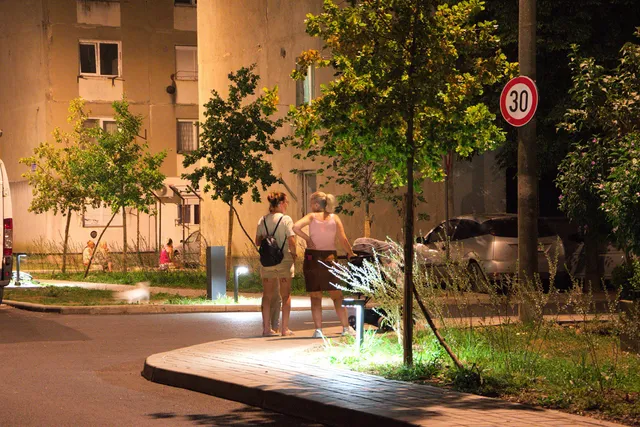
The project aims to revitalize the public spaces in the Pipirig neighborhood of Caransebeș, specifically the areas along the streets: Luță Iovită, Sportivilor, and Aleii Rapsodiei. The need for this project emerged from the COVID-19 pandemic context, during which public spaces associated with apartment buildings became extensions of people's living areas.
The funds were provided by the city hall, and the brief focused on recycling or using local materials as much as possible.
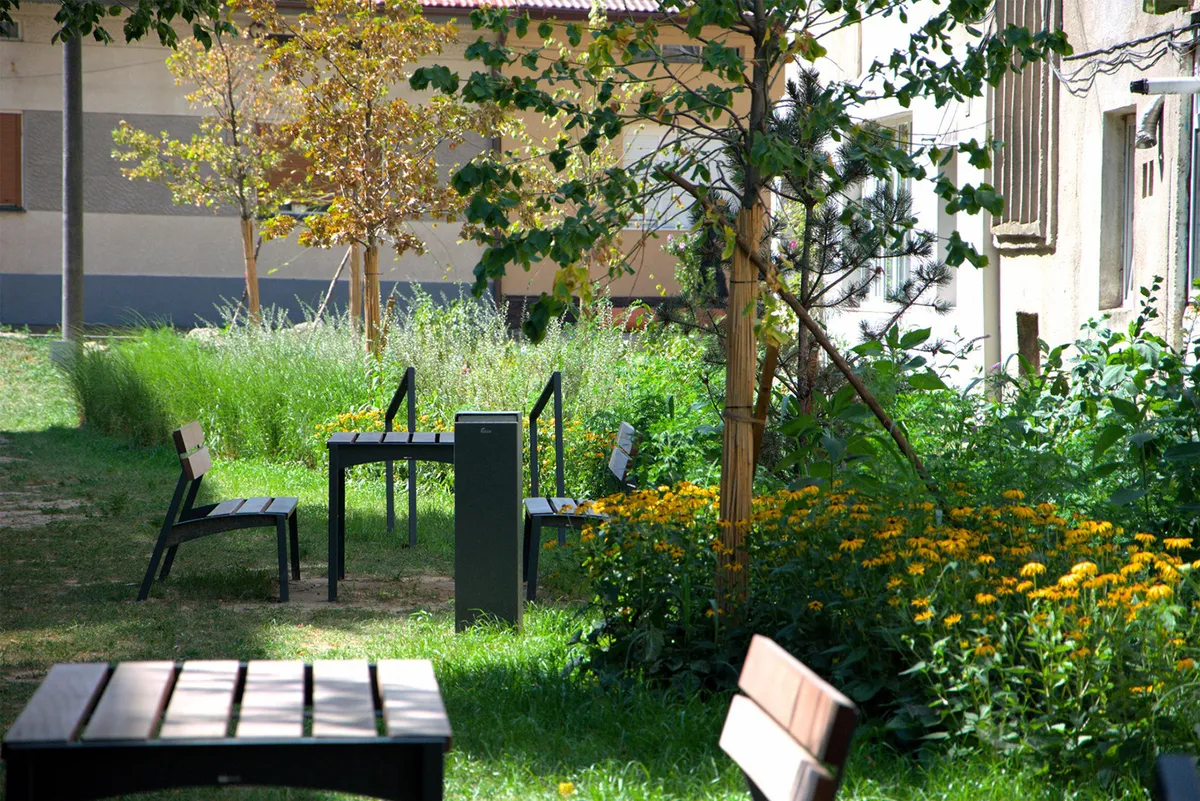
The project seeks to enhance the urban green, its biodiversity, and vegetation layers by introducing trees, shrubs, ground cover plants, perennial and flowering plants, climbing plants, and the seeding of meadow mixtures. Particular areas such as rain gardens have also been included for the onsite management of stormwater retention, which has sustainable effects on the natural water cycle.
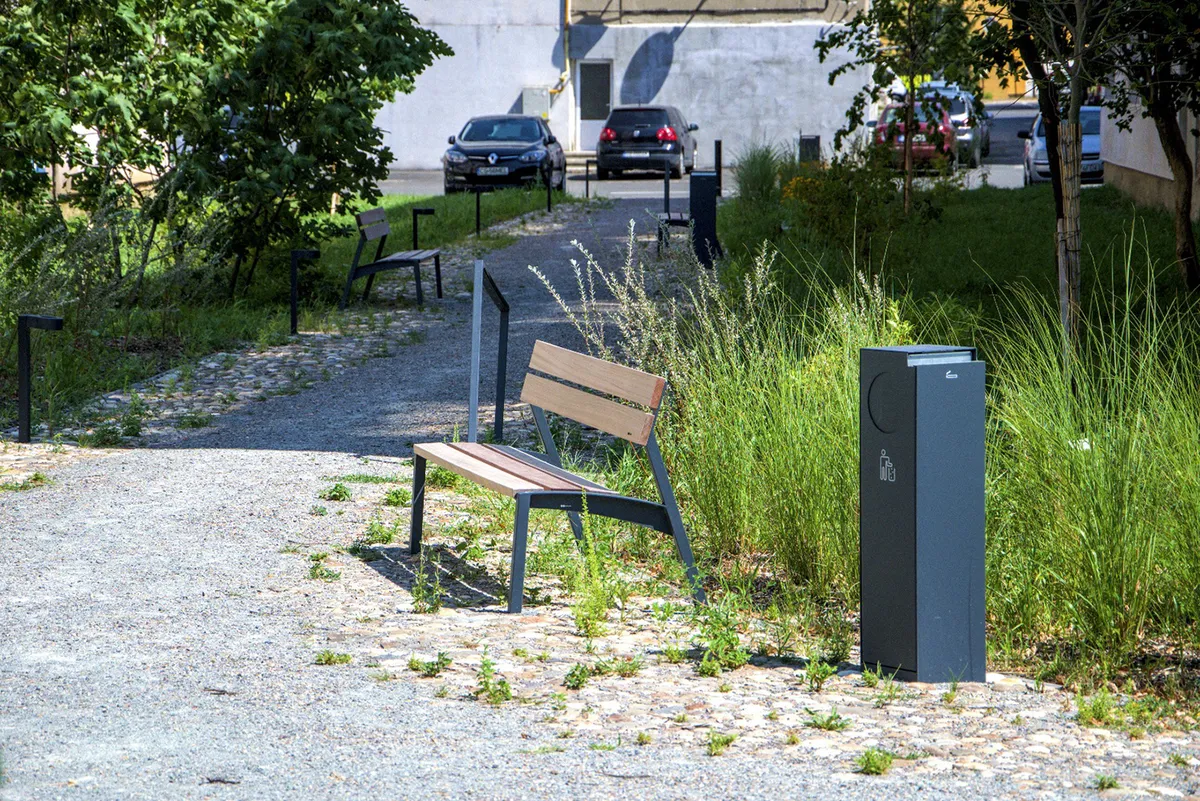
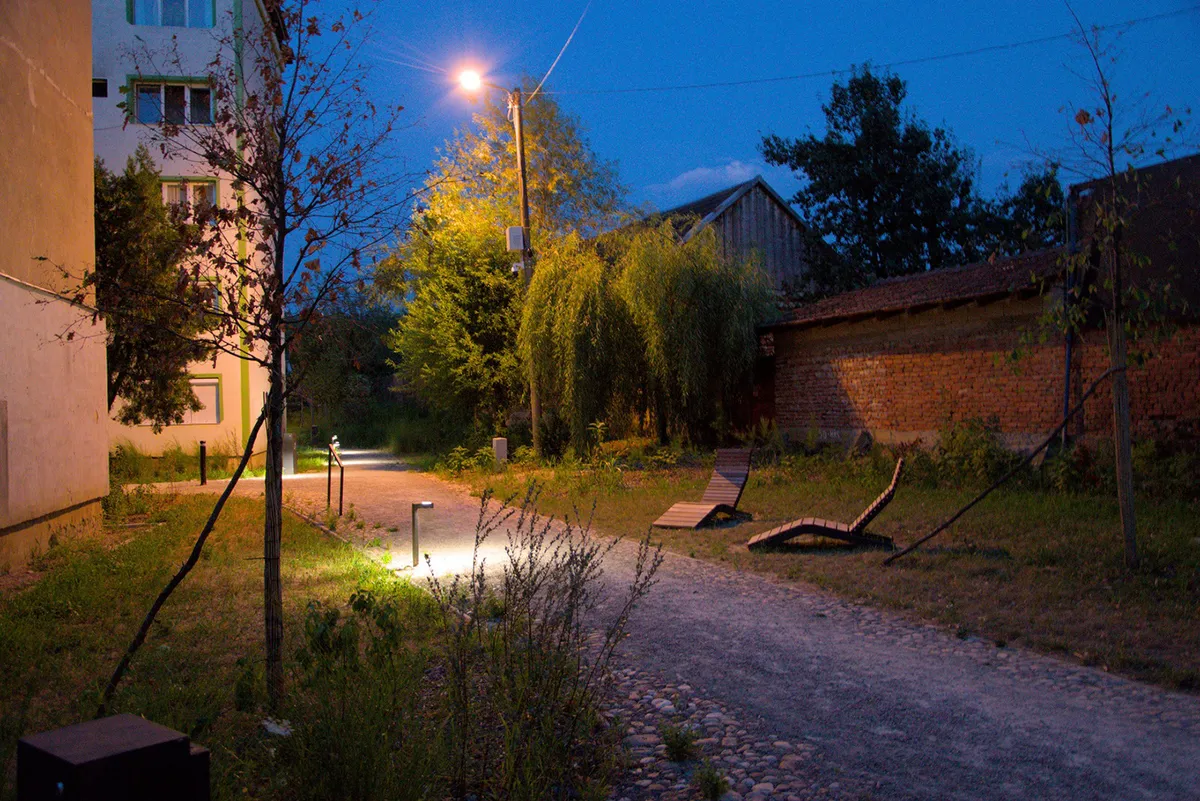
Additionally, the project aimed to improve recreational and resting areas by including urban furniture and introducing architectural lighting, to further enhance social cohesion.
New alternative paths and walkways, with a permeable surface and structure, have been created through the urban green (the landscaped gardens) calibrated to the needs and density of a residential neighborhood with collective housing.
Beyond transforming the area perceived as unsafe in the city, the project has promoted an integrated and sustainable approach focusing on the future of the community and its commons.