ADNBA was established in 2003 in Bucharest, by Andrei Șerbescu and Adrian Untaru, later joined by Bogdan Brădățeanu and Esenghiul Abdul. With almost 20 years of architecture experience, ADNBA is a group of dynamic architects and professionals with various background and skills, always in search of the balance between experiment and experience in order to develop the best design solution for each project. The practice is involved in a diversified body of work with projects that include residential, office or public buildings. In addition, ADNBA has achieved critical both nationally and internationally, having been awarded various architectural distinctions.
Project description in English
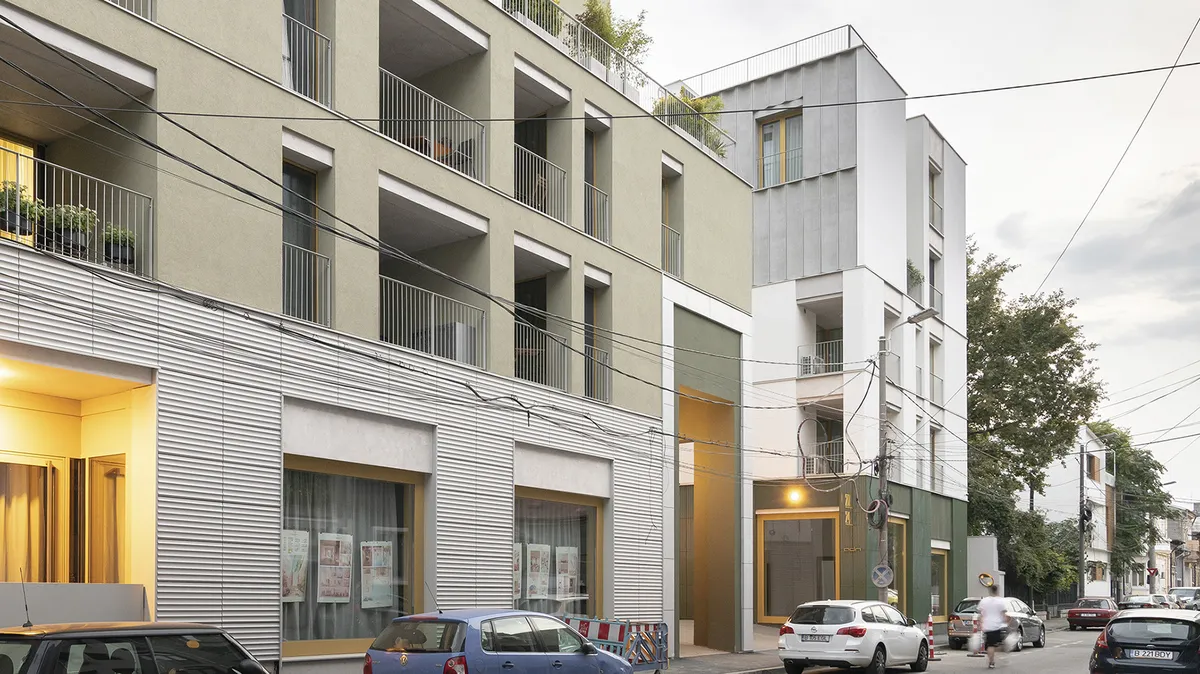
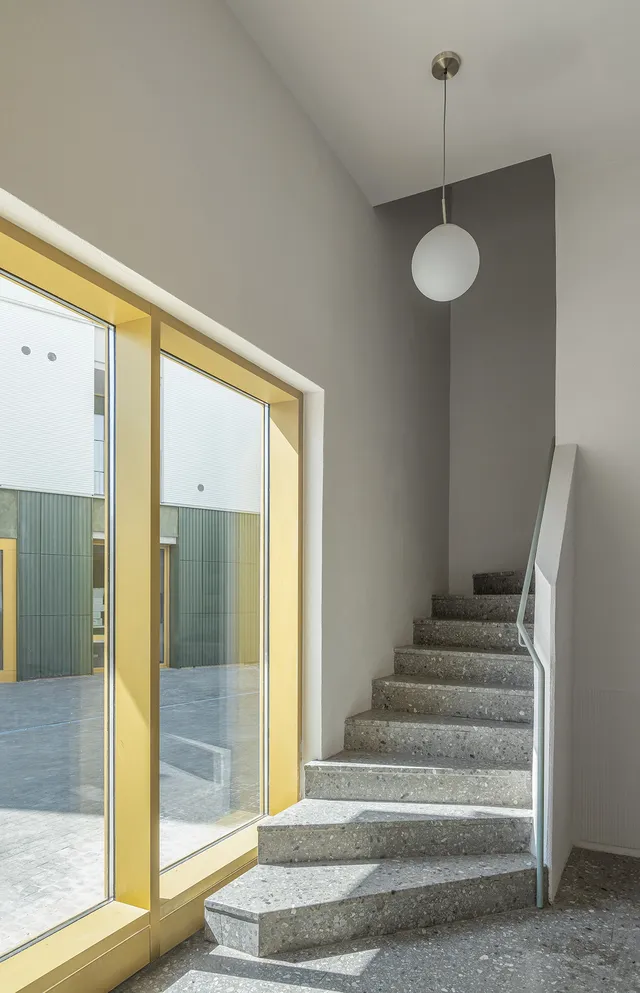
Like many other places in Bucharest, here too arises the need to somehow piece together mixed bits and pieces from the neighborhood, which overlapped throughout time.
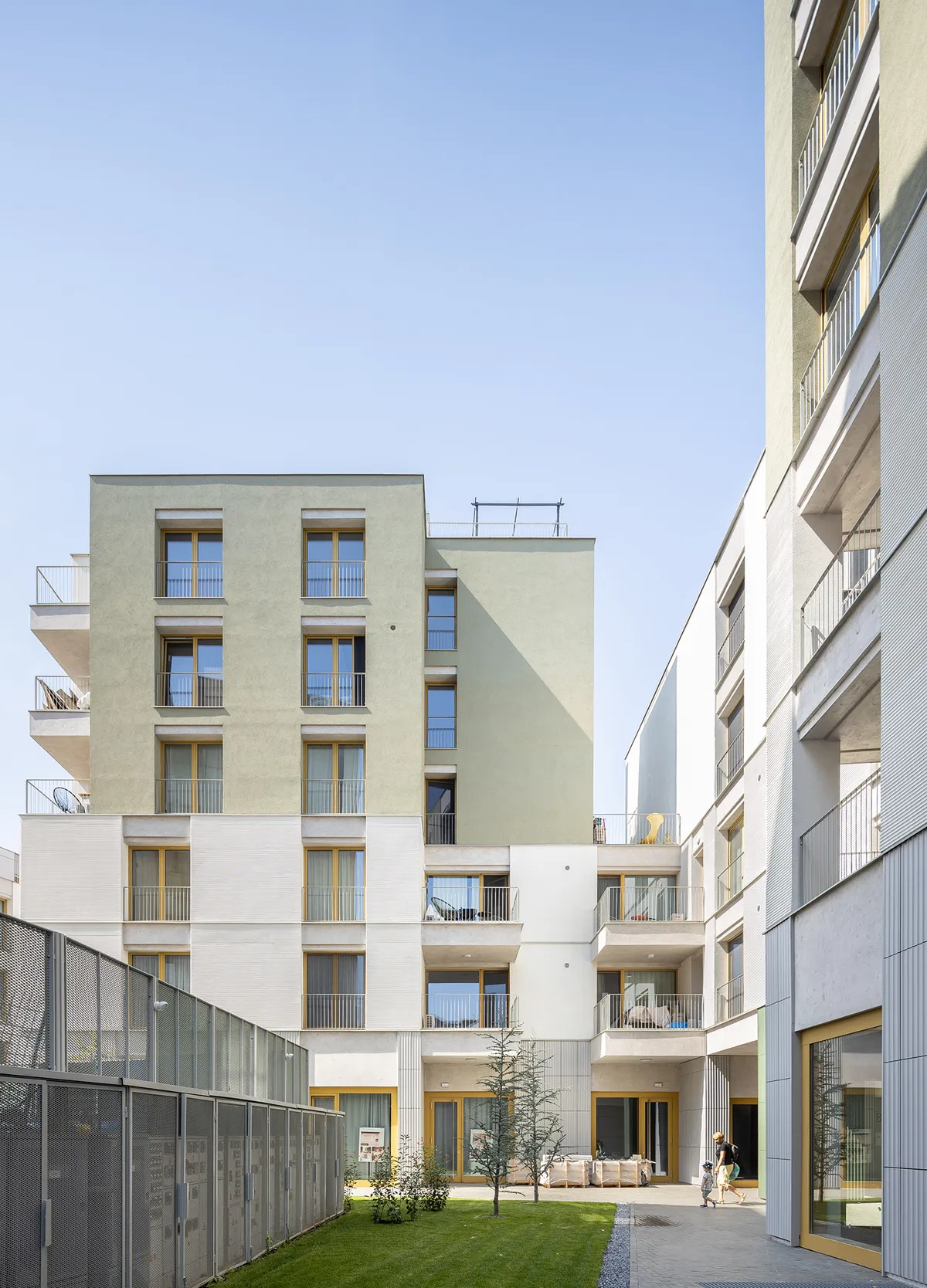
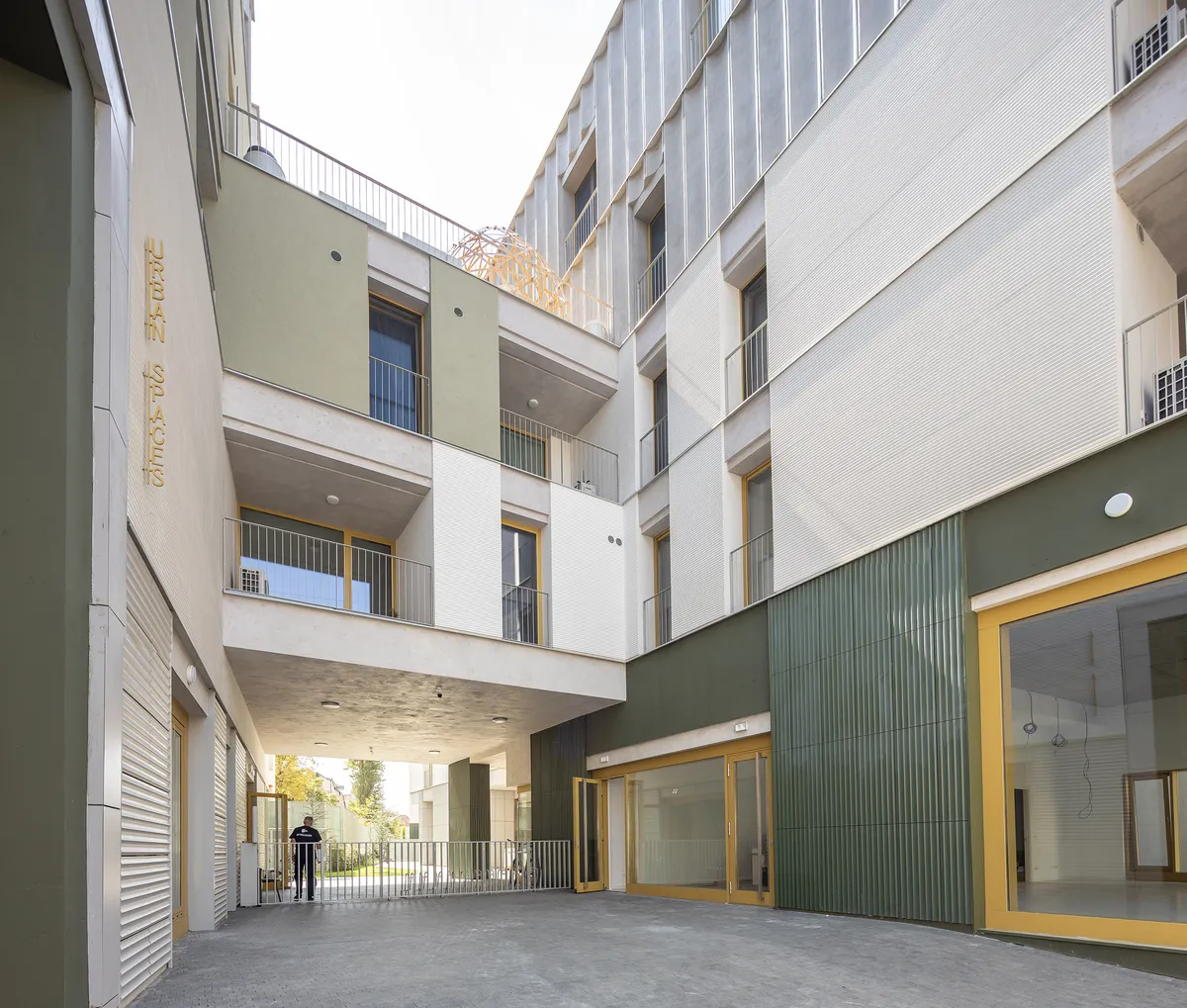
This need is accompanied by an attempt to recover some of the either restrained or whimsical elegance of Bucharest's architecture where means such as the play on surfaces, textures, nuances of finishes, depth of folds or the emphasis of edges and creases were used in its creation. The overlapping enclosures as well as the mixture of materials and nuances could also be regarded as a different type of fragmentation.
The ground floor is taller and stays open to the street, which is not necessarily typical for this side of town or for Bucharest itself. That which can be referred to as typical, however, is the random encounter, on a street corner, crossroad, alley or in the courtyard of a more upscale house, of a shop or a small neighborhood bar. It is in this type of unordered, small scale, neighborhood that we imagine our opening towards the street, for the courtyard and the buildings on Sfintii Voievozi Street 20-24, to fit in.