1/3
2/3
3/3
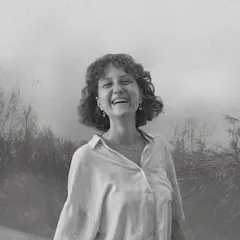
Author(s) / Team representatives
Ramona Buia
Profession
Architectural Designer
Text presentation of the author in English
Ramona Buia was born in Timisoara, Romania in the summer of 2000. She was raised partly in the flat fields of Romania, partly in a valley among its mountains, and partly by the sea in Italy. Those were the school years, the years of playing outdoors, working in a café by the sea with her family, and volunteering for all kinds of cultural organisations and events.
When she began her bachelor's programme, Ramona moved to the Netherlands, starting her Dutch narratives. Over all these years, she has been shaped by an environment grounded in a strong culture of slowness and collective care.
Nowadays, the author is fascinated by organic and inorganic phenomena, landscapes, gardening, natural and reclaimed materials, making processes, and everything that bears a trace, a scar, or a memory.
Project description in English.
Football is the most widely followed and beloved sport in the world. Over the past centuries, we have built, both physically and conceptually, a separate empire of football: professions, infrastructure, rituals. Yet this world remains almost invisible to the ordinary individual. Almost. Whether we choose to or not, we are occasionally drawn into its immediate orbit. Someone watches a match, someone else places a bet, while another person follows the sports news.
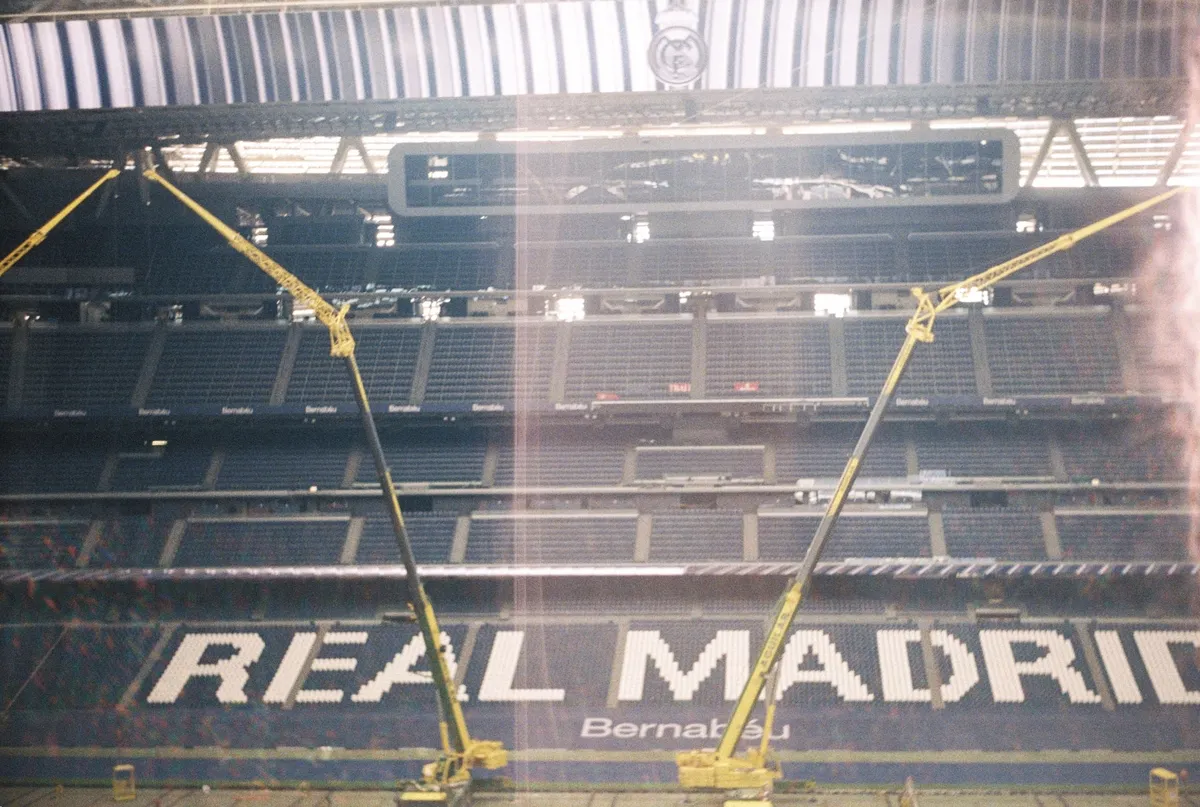
In some of our cities, stadiums are being built. Typically oversized and imposing structures, monuments of the modern and contemporary era, stadiums can be seen as trophies of football culture, places that burst with energy and movement when two teams meet on the pitch. But what happens inside their closed shells during all the remaining hours? Stadiums become sleeping giants within our cities, while we, the inhabitants, become the tiny figures surrounding them. However, sleep does not mean that the machinery stops turning.
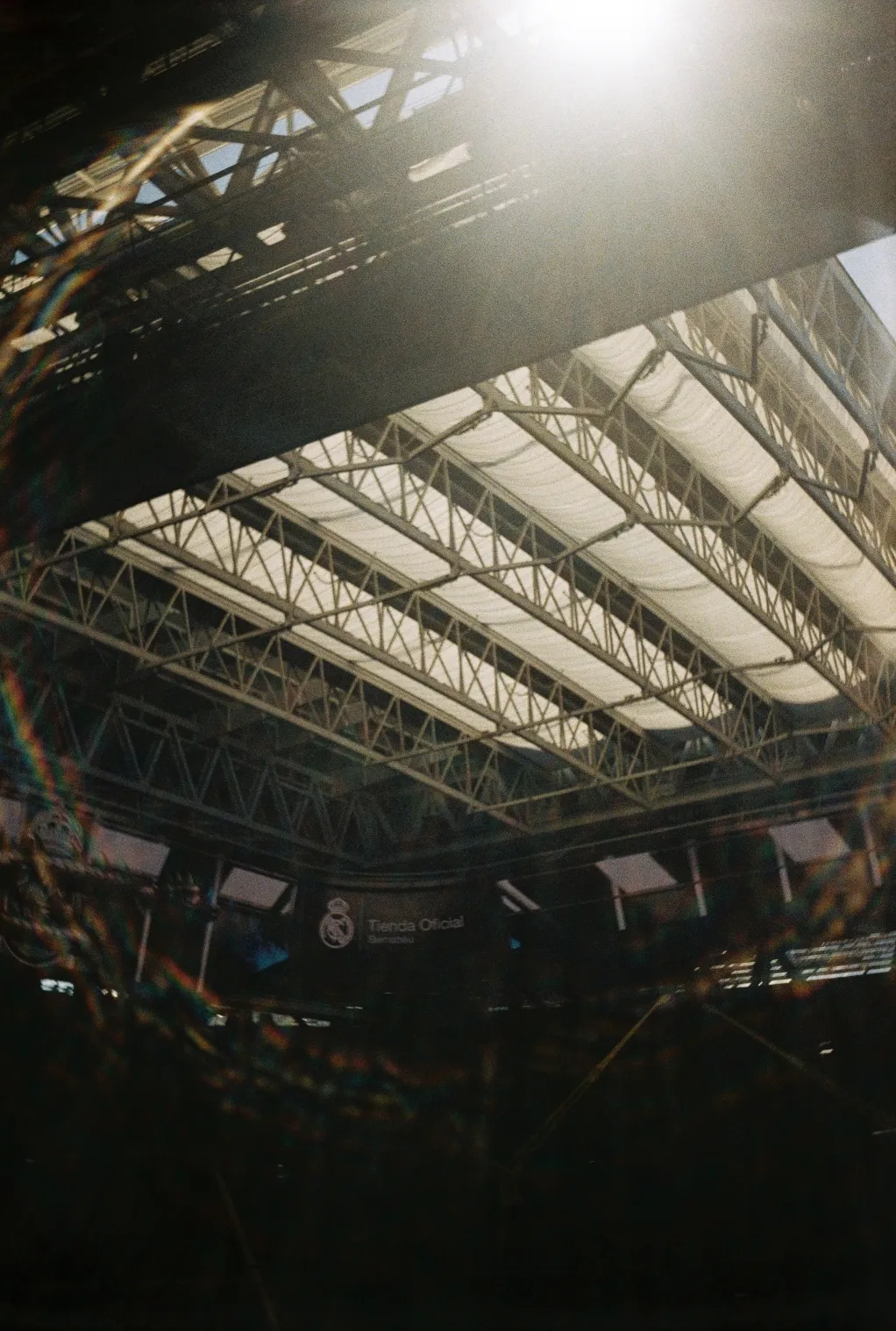
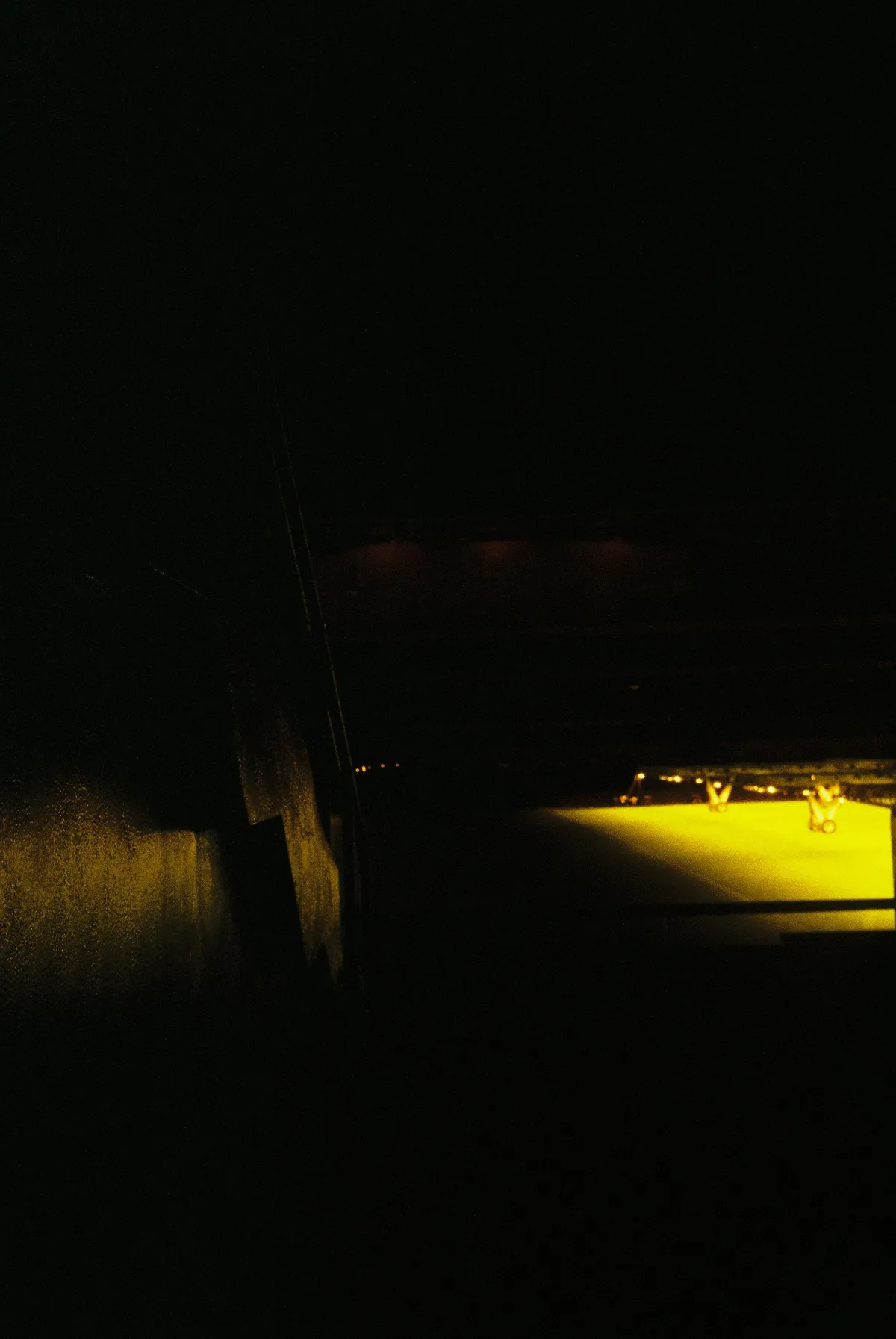
The images captured in this analog photographic series are inspired by the author’s fascination with the banal, with the quiet, everyday infrastructure that underpins our contemporary world. There are 8760 hours in a year. Approximately 150 hours of primary activity take place inside a stadium over the course of a year. The remaining 8610 hours are hours of passive activity. This is sustained by processes hidden from the casual street life: maintenance, renovation, cleaning, preservation, tourism, and facilitation. The photographs capture the latent interior state of stadiums during an arbitrary moment within these 8610 hours of a calendar year.
This series is an ode to the unphotogenic infrastructure that allows such a colossal machine to function. But also, it is a critical reflection on the unequitable values prioritized by the mere existence of such monuments and the importance we offer them, even in times of imbalance and societal pressure.