1/3
2/3
3/3

Author(s) / Team representatives
Borjan Brankov
Profession
PhD, Research Fellow, Architect
Text presentation of the author in English
Borjan Brankov, PhD in Architecture and Urbanism, completed his PhD thesis "Development of contemporary models of temporality in the conception of common spaces of multi-family housing" in 2024. Since 2014, he has participated in architectural and urban design competitions, both independently and as a member of author teams, as well as in professional exhibitions. He was the recipient of the Sakura Scholarship from the Embassy of Japan in Belgrade in 2015 for research on architecture in Japan. From 2016-2019, he was a PhD Scholar; from 2019-2023, a Research Assistant; from 2023-2024, a Senior Technical Associate; and from 2024, a Research Fellow at the Institute of Architecture and Urban & Spatial Planning of Serbia (IAUS). He has been part of various research and scientific projects such as the NONA project, Connect GREEN, Attractive Danube (all Interreg Danube projects), Green, livable and resilient cities, Serbia (World Bank), etc. As part of his professional engagement, he works in architectural design and urban planning. He won multiple awards at the International Salon of Urbanism (Serbia).
Project description in English.
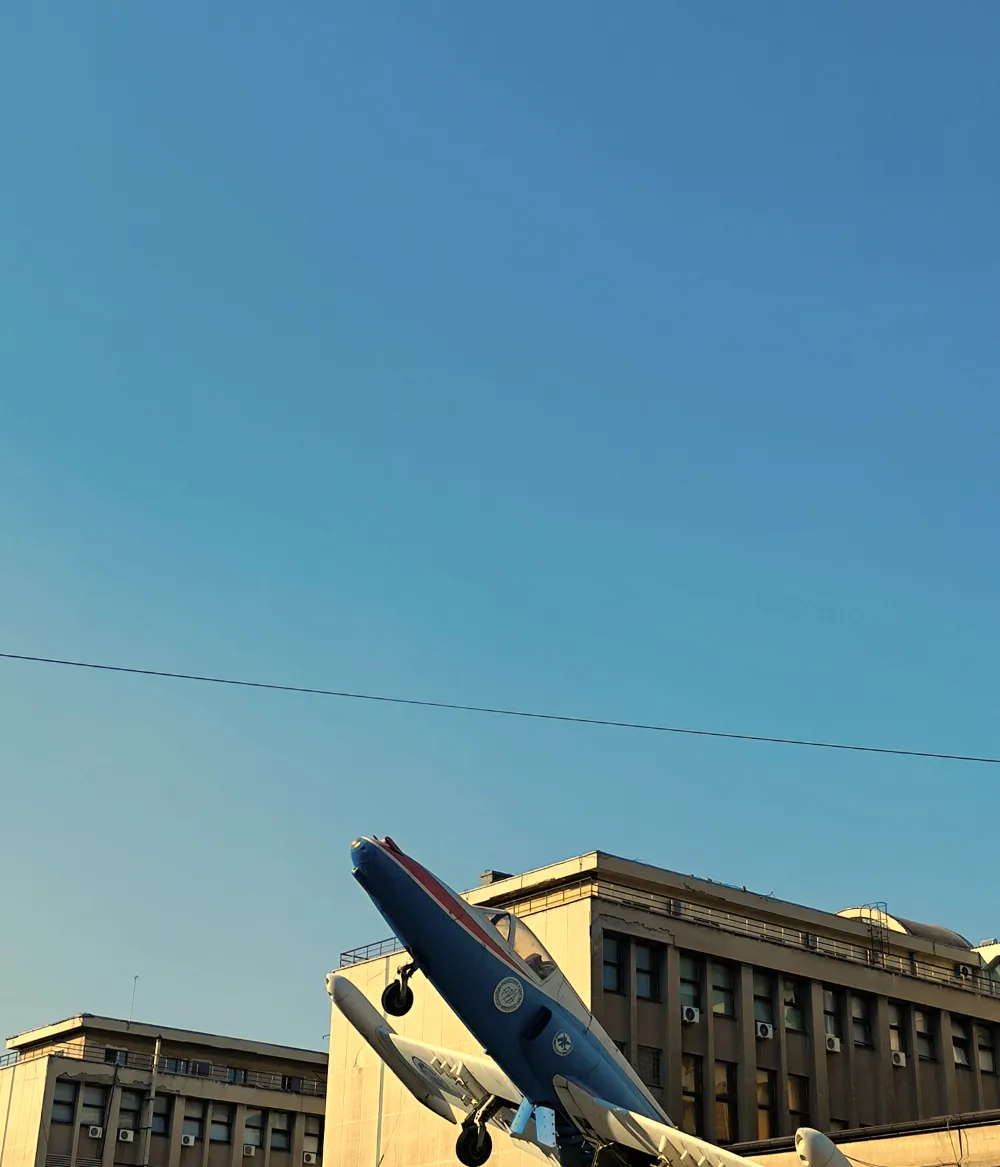
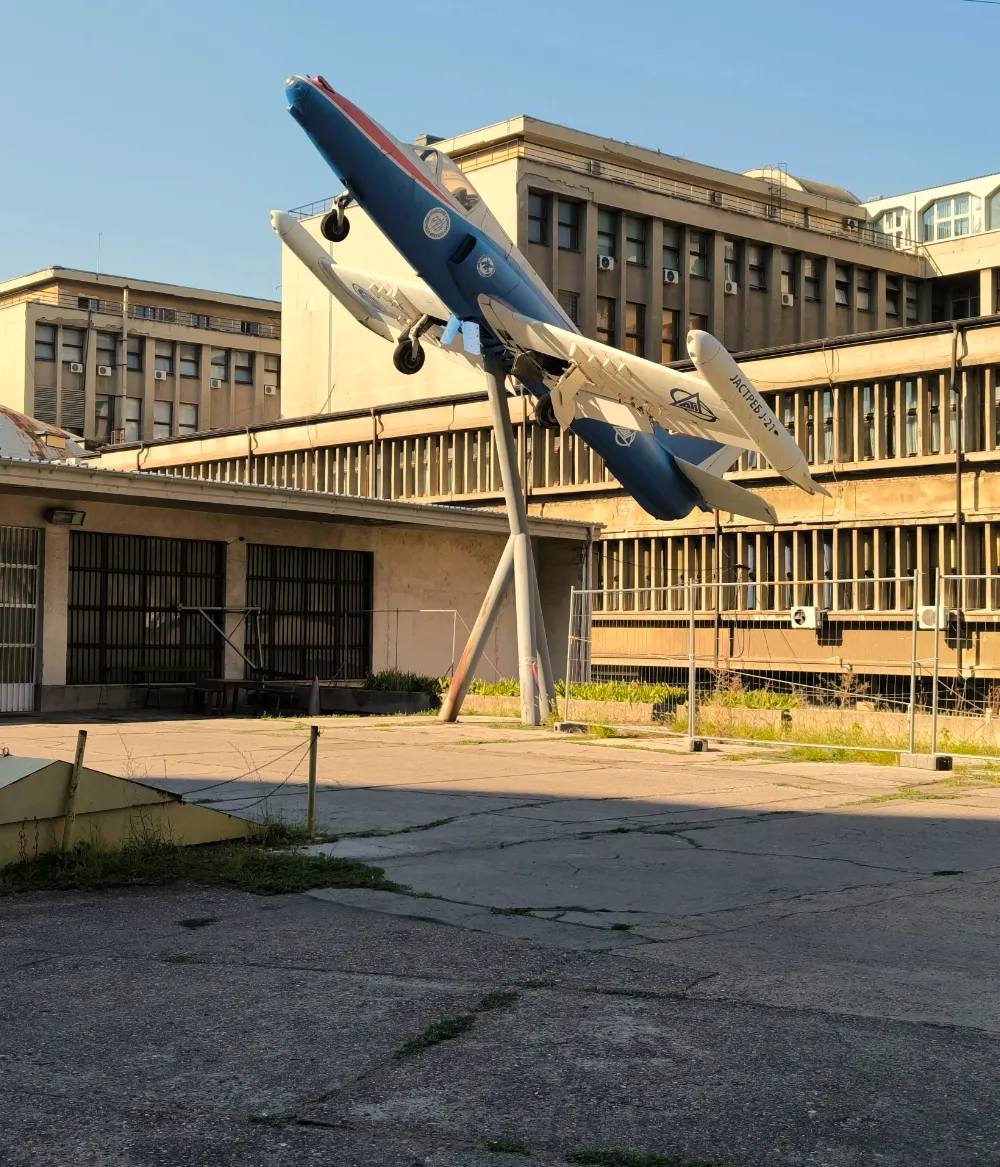
I’ve always been captivated by monuments – once part of active machinery, now positioned to evoke memories of that time, countless flights, and explorations. It’s not just that airplanes are often placed on pedestals, but also the careful selection of their posture, designed to create the impression that they’re caught mid-flight. They don’t simply represent the aircraft; they also depict what it did.
The same principle applies to architectural buildings as “machines” – left as sculptures in the midst of flight, whose function and memory remain only as echoes in our thoughts and the observer’s perception.
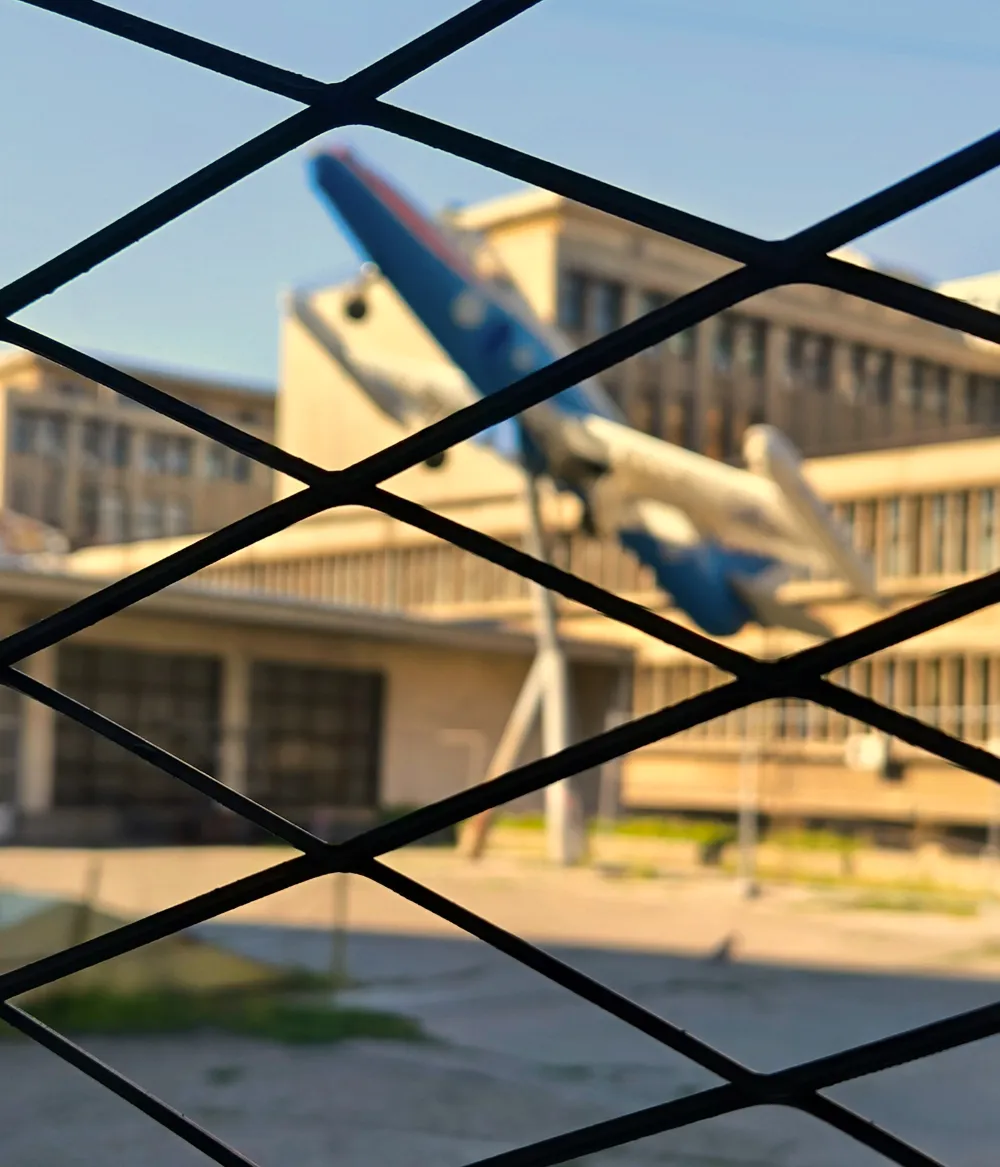
The series of photographs depicts the initial suggestion of flight – just the airplane and the sky (in theory), then gradually introduces its pedestal, grounding it, and finally, in the last image, reveals the real gated context of a retired machine.
How do we experience that moment of “flight” when we encounter a forgotten architectural object or space?