1/5
2/5
3/5
4/5
5/5

Author(s) / Team representatives
Kincső Nagy
Profession
Architect
External collaborators
îndrumător: conf.dr.arh. Bogdan Demetrescu
Project location
Uivar, Romania
Project start date
September 2024
Project completion date
June 2025
Photo credits
Kincső Nagy
Text presentation of the author/office in English
I graduated from the Faculty of Architecture and Urbanism in Timișoara in the summer of 2025, specializing in heritage conservation and restoration. I consider myself lucky that the office where I currently work in Cluj-Napoca has given me the opportunity to be involved in restoration projects.
One small panel from the 2025 Venice Architecture Biennale has remained with me: “To build or not to build, that is the question.”
I am beginning to realize that the idealized idea of restoration can be quite different from its reality. New construction may often seem like the easier or more advantageous option, while restoring an existing building brings a different set of challenges. Yet this only makes me more convinced by Köllő Miklós’s words: “The greenest house is the one that already stands or is not built at all.”
Project description in English
The hydro-technical node at Uivar, a small village on the Bega Canal, occupies a strategic position within several interconnected networks. It is directly linked to the functional locks of Sânmihaiu Român (Romania) and Ittebej and Klek (Serbia), while the Bega itself connects to the Tisza, the Danube, and the wider Banat hydrographic system, including the Old Bega, Timiș River and Terezia Canal. At the same time, the cycling route along the canal embankment forms part of the European cycle tourism network.
The surrounding landscape reflects the identity of the Banat Plain: vast agricultural fields and a rich natural ecosystem concentrated along the Bega Canal, which functions as a cultural, ecological and social corridor.
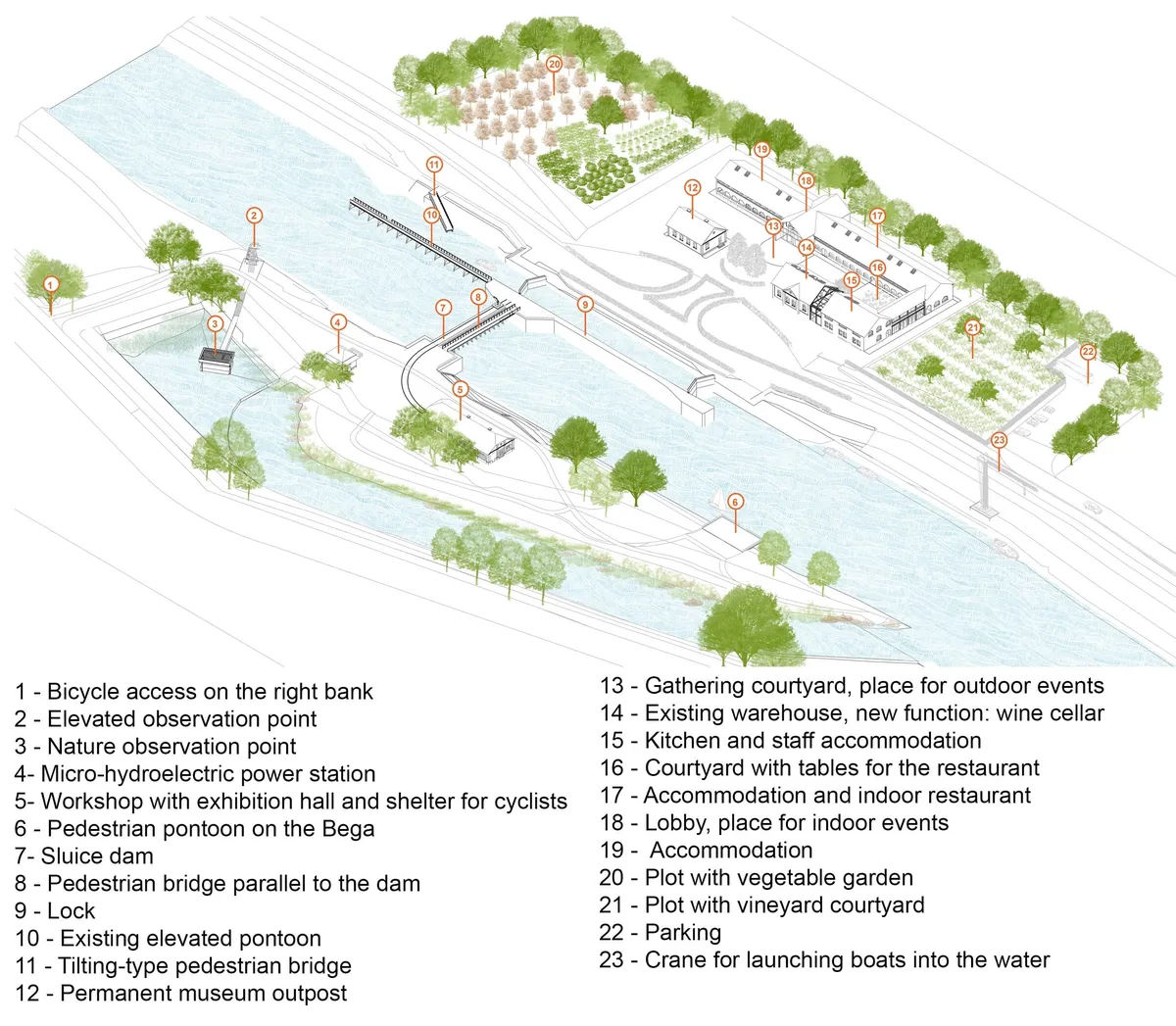
This exceptional connectivity became the foundation of the project concept: transforming the hydro-technical node into a cultural and tourist hub that brings together local, cross-border and European communities. The proposal draws inspiration from the traditional inn and the Hungarian csárda, historically places of hospitality, exchange and encounter.
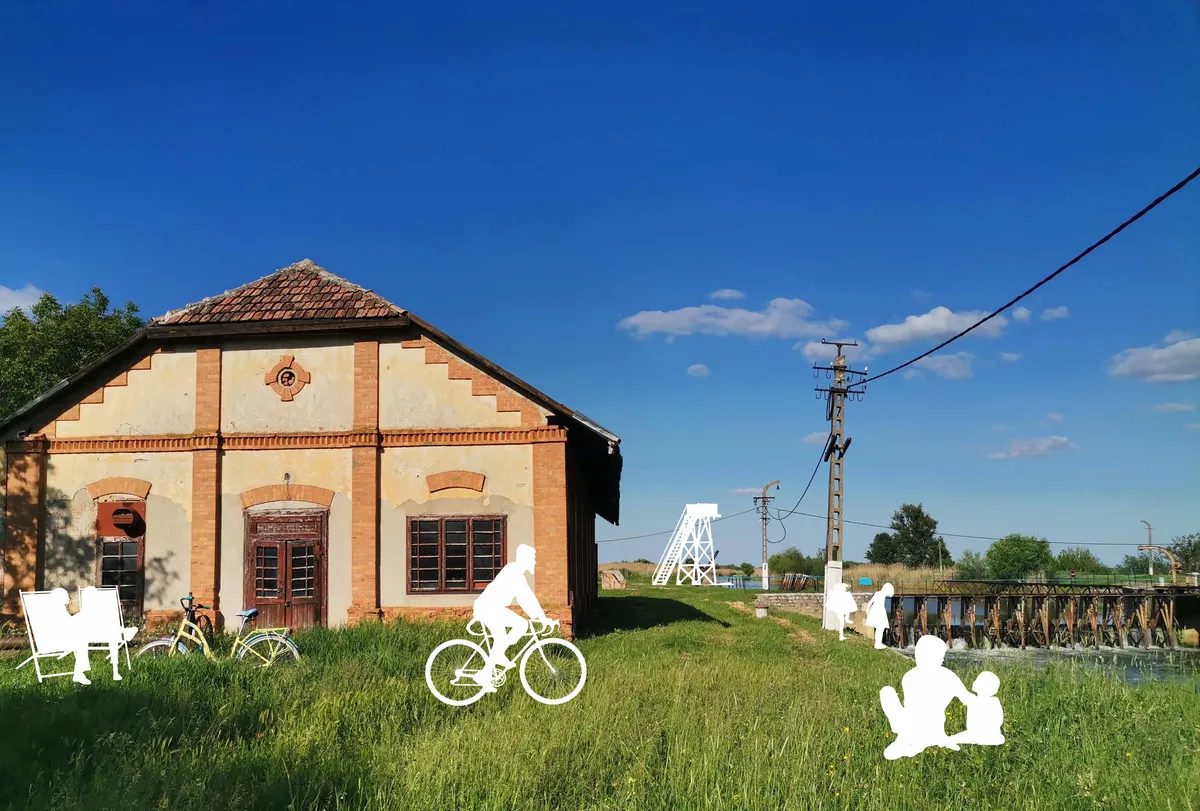
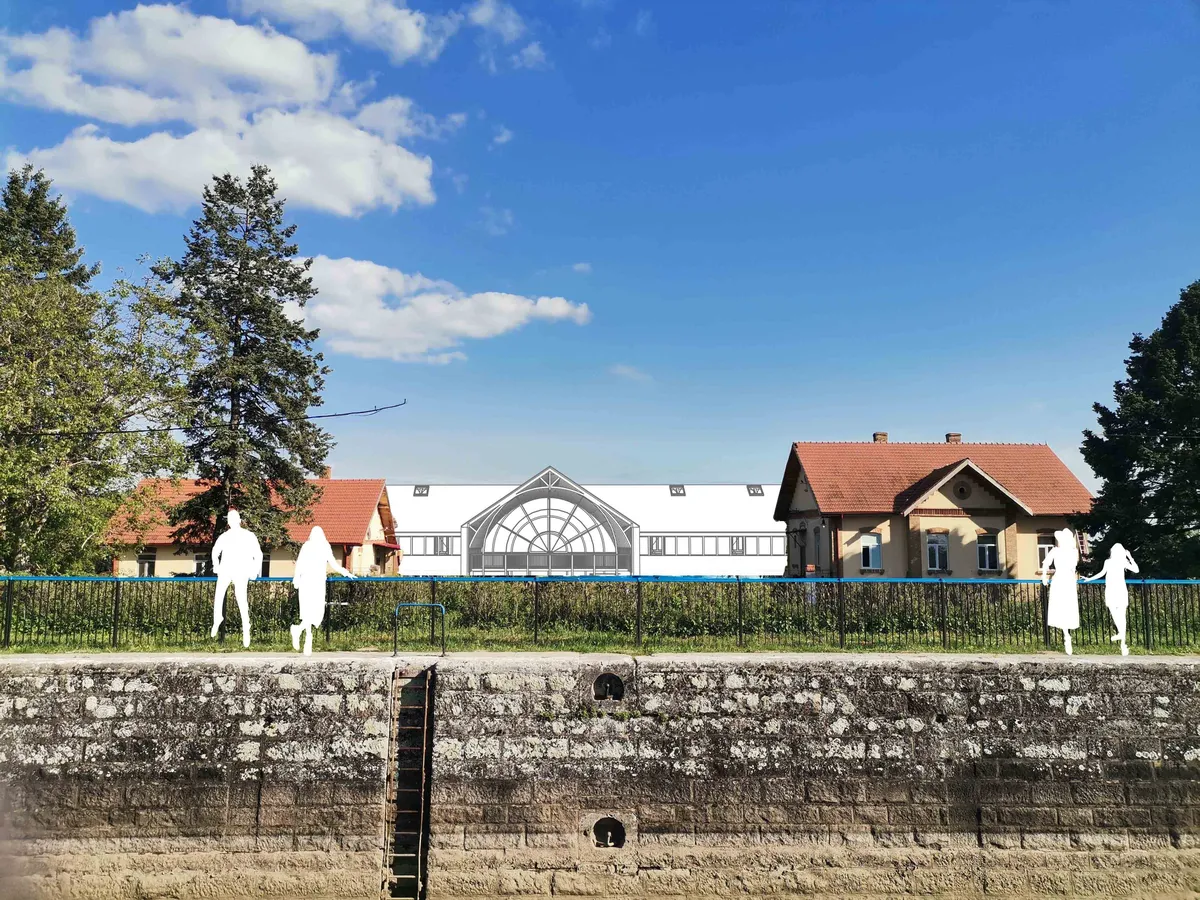
The spatial intervention responds to the character of the site. The right bank remains largely untouched, preserving its natural landscape through a minimally invasive approach. The left bank accommodates the new inn complex, comprising guest accommodation, a restaurant, an event hall, a wine cellar and complementary facilities. Two adjacent agricultural plots reinforce the project's sustainable vision: one becomes an orchard with vegetable gardens, while the other is developed as a vineyard courtyard. Together, these elements create a largely self-sufficient rural destination that celebrates the landscape, local traditions and the heritage of the Bega Canal.