1/10
2/10
3/10
4/10
5/10
6/10
7/10
8/10
9/10
10/10
Author(s) / Team representatives
Lili Szaszák
Profession
Architect
External collaborators
Architect advisor: András Márk Bartha DLA
Project location
Szeged, Hungary
Project start date
September, 2025
Project completion date
February, 2026
Photo credits
Fortepan (Bauer Sándor), Szaszák Lili
Text presentation of the author/office in English
My name is Lili Szaszák; I graduated in February from the Faculty of Architecture at the Budapest University of Technology and Economics. I am currently doing my post-graduate internship abroad. I have always felt a strong connection to the places where I grew up, where people experienced their surroundings more instinctively, without any kind of universal value judgements. This perspective, free from professional influences, also shaped my university years: at every turn, I strove – even if not entirely consciously – to draw attention to unconventional problems, details and connections. I believe that one of the most valuable ways to utilise our creative energy and resources lies in our ability to create something of value even from situations that were initially deemed difficult, or even hopeless. If we label something as worthless from the outset, that in itself determines the tone and quality of any subsequent intervention. The discrimination against the everyday buildings of socialist modernism clearly illustrates the world of hasty and often superficial value judgements. For me, it is precisely this problem that opens up a new perspective: the possibility of recognising the value inherent in the built environment even where others do not see it at first glance.
Project description in English
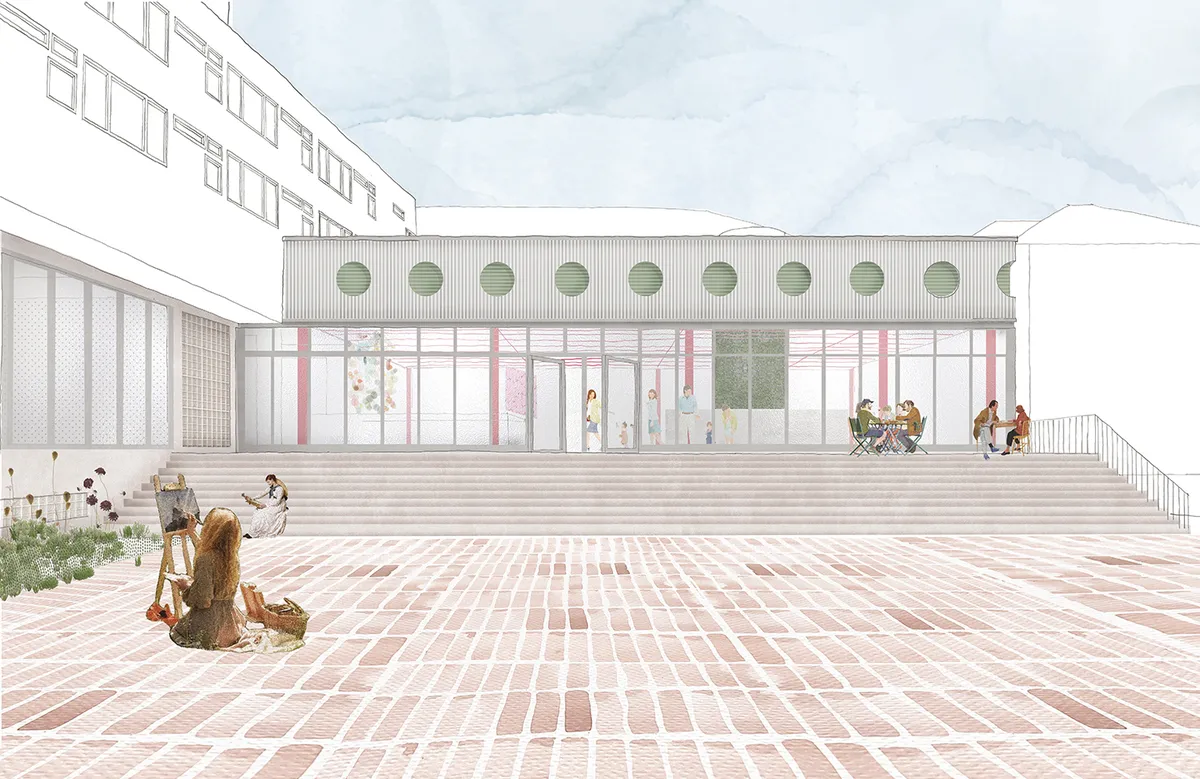
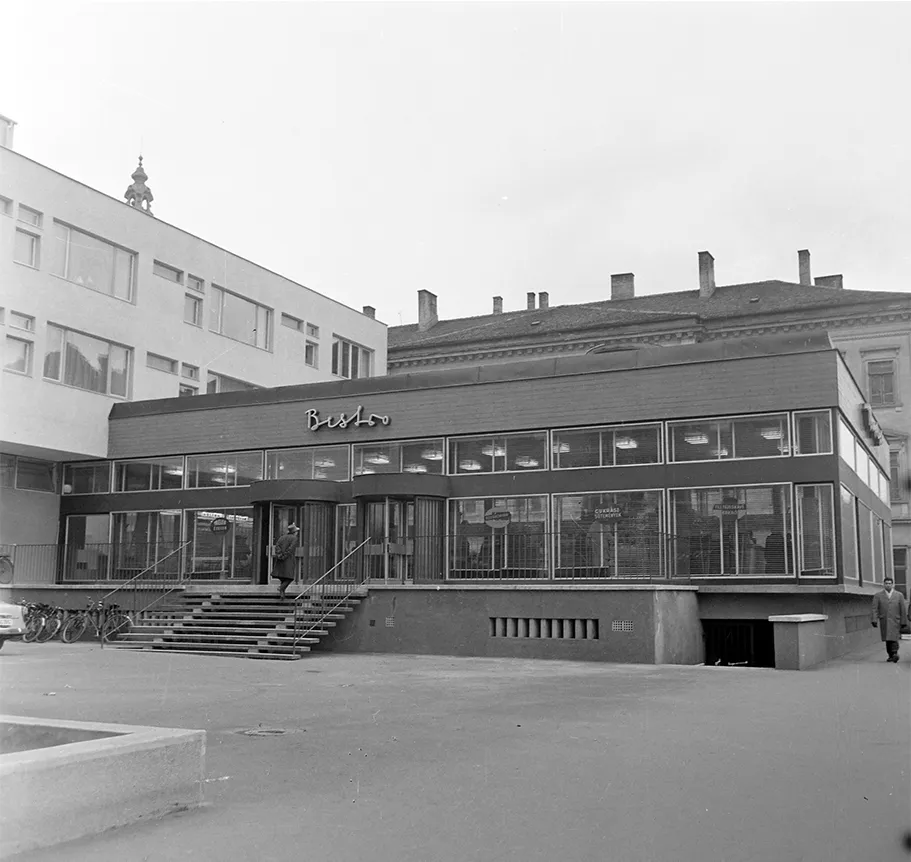
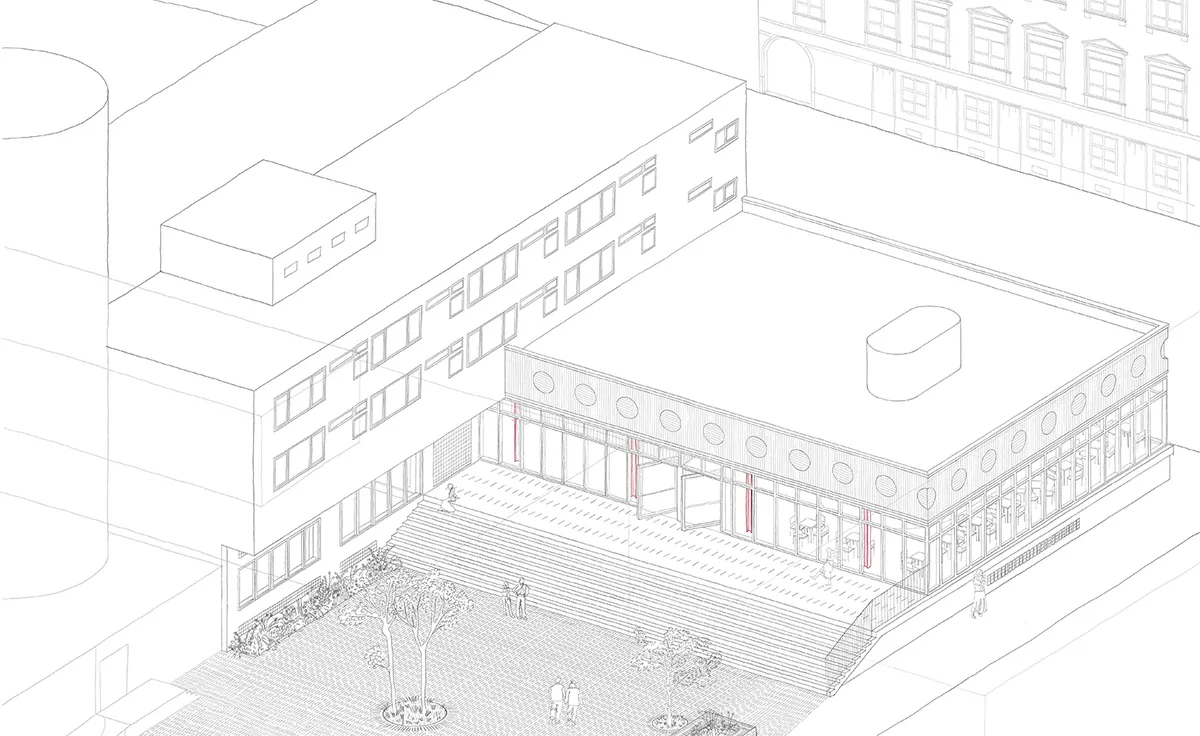
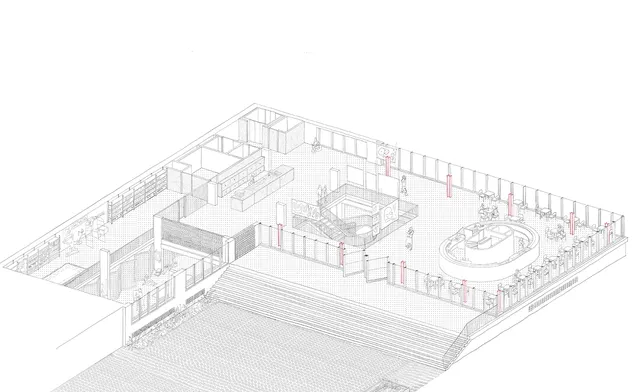
In the center of Szeged, stands a neglected socialist-modernist building with a small square in front of it, in a highly favorable location. Over the years it has functioned as a bistro, a shop, and a second-hand clothing store, yet it has repeatedly fallen into abandonment. Its architecture is a distinctly Central and Eastern European phenomenon, characteristic of the former Soviet sphere of influence. Objectively speaking, the building is not architecturally valuable; it is a product of socialism's fast, inexpensive, and pragmatic construction methods. Yet its steel and concrete structure remains sound. The problem is not the building itself, but the lack of function, attention, and care. Szeged's cultural scene fluctuates between formal institutional programs and informal events linked to bars. Within this context, the building could become a small-scale cultural hub, a cultural "KÖZÉRT" - a play on words based on the Hungarian term for a corner shop: köz ("community/public") and ért ("for"), suggesting a place that exists for the community. Envisioned as a meeting place with a café, it would offer a wide range of activities connected to art and culture. The design approach is inspired by the history of Szeged itself. Without the devastating flood of 1879, the city would never have been rebuilt into its current form. A floodplain becomes fertile because the flood removes what is weak or dead, leaving behind new soil and trees strong enough to survive. Following this logic, the project selectively removes walls and openings while preserving the stable structure and geometric proportions. Existing materials are reinterpreted and reused; demolished brick, for example, becomes aggregate in new walls and flooring. The aim is to create a new whole from existing elements rather than replace them. The character of an urban building should not be homogenized. Instead, the project emphasizes its imperfections and everyday qualities, turning them into defining features. This includes highlighting its awkward attachment to the neighboring building and openly embracing inexpensive materials such as corrugated metal, plywood, and polycarbonate. Rather than establishing a fixed final state, the intervention creates an open framework for change, occupation, and continuous transformation. The space is intended not only to host creative activity but to become an active participant in it, evolving over time and gaining renewed relevance within the everyday life of Szeged.