1/3
2/3
3/3
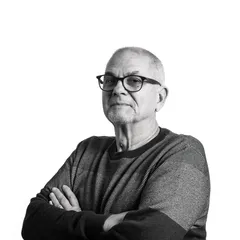
Author(s) / Team representatives
Prof. dr. arh. Vlad Gaivoronschi
Profession
arhitect
Website
Text presentation of the author in English
Vlad Gaivoronschi is professor Ph.d. at F.A.U. Timișoara Faculty, teaching architectural theory and studio. Partner at Andreescu & Gaivoronschi, with realized projects, national and international prizes and nominations, Second prize at Central Glass Competition, Tokyo 1981, The ECCS European Prize for Steel Construction in 1997, nominations at the European Architecture Prize „Mies van der Rohe”2008, 2010, shortlisted at W.A.F. Barcelona 2010, Berlin 2016, Winner at the German Design Award, Frankfurt 2018, 2020, 2025, Winner at Big SEE Ljubljana 2019, 2021, 2024, BETA prizes in 2016, 2018, President’s International Jury Saint Gobain Gyproc Trophy Prize 2021; Over ten national prizes, nine edited books. Present on websites such as www.archdaily.com, www.architizer.com, etc., in exhibitions and conferences in Bucharest, Cluj-Napoca, Budapest, Leipzig, Thessaloniki, Szeged, Vienna, Istanbul, Brussels, Tokyo, Singapore, Berlin, Barcelona, Seoul, Frankfurt, Ljubljana, Novi Sad, etc.. President of Romanian Order of Architects O.A.R., Timis County, 2010-18. Member in the Professional Practice Comission of the International Union of Architects. Distinguished in 2025 with the SHARE OPERA OMNIA PRIZE. For the BRITISH INTERNATIONAL SCHOOL TIMISOARA, HIGHSCHOOL BUILDING “ANA ŞANDOR”, together with architect Simina Cuc obtained THE “DUILIU MARCU” Romanian ACADEMY PRIZE for Architecture and The “Reference for Future” Special Prize, BNA National Architecture Biennial, Bucharest.
Project description in English.
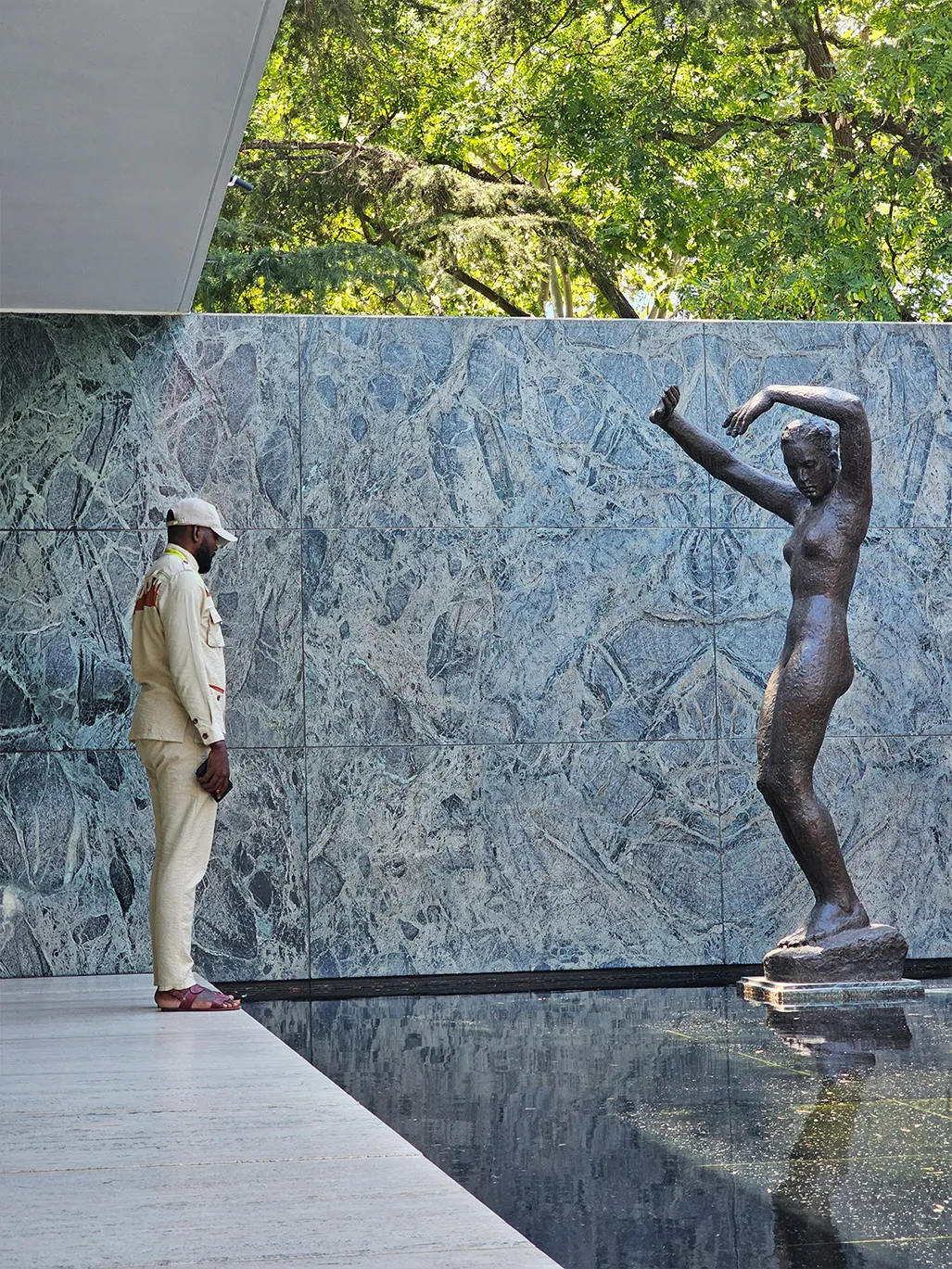
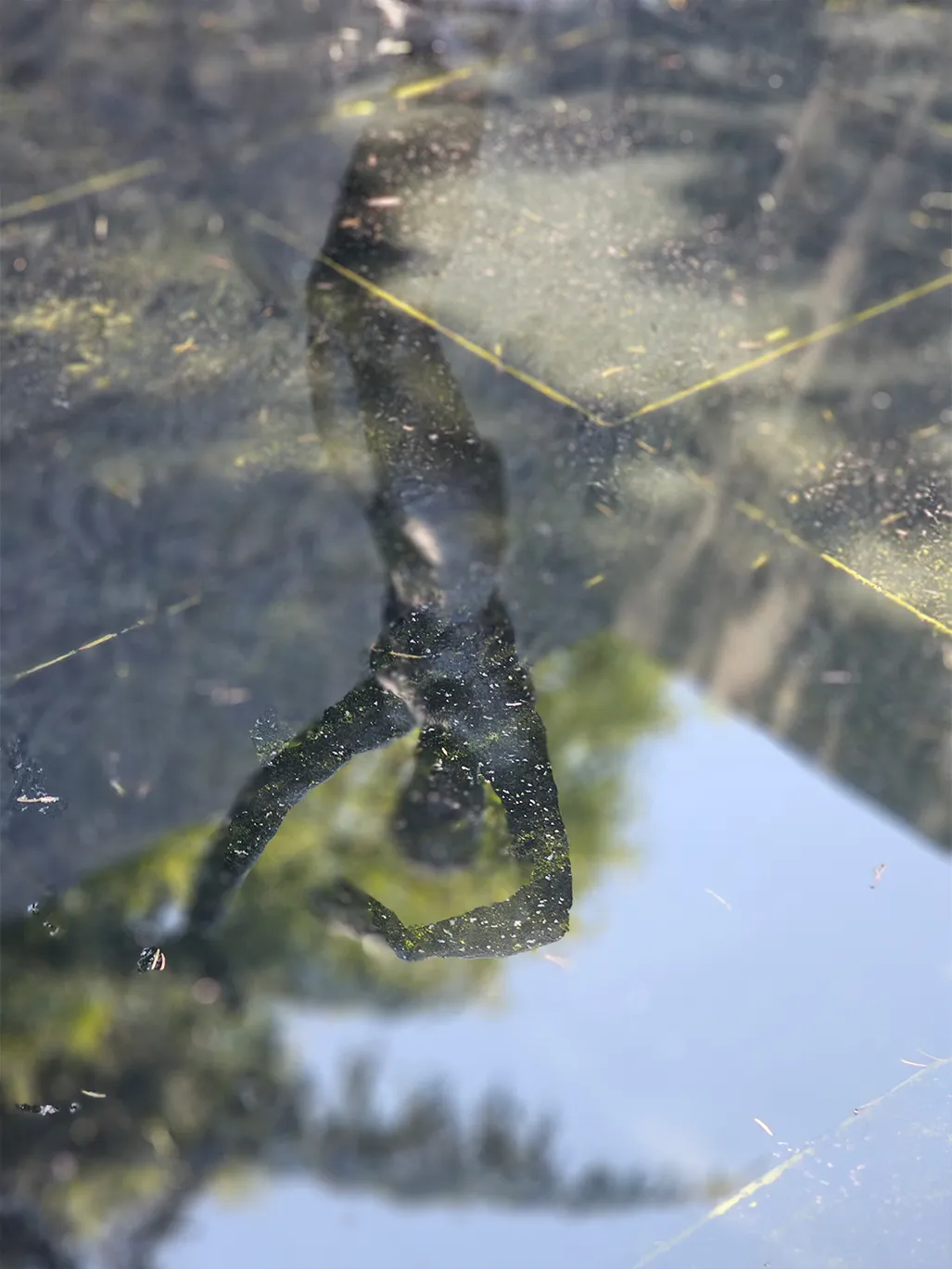
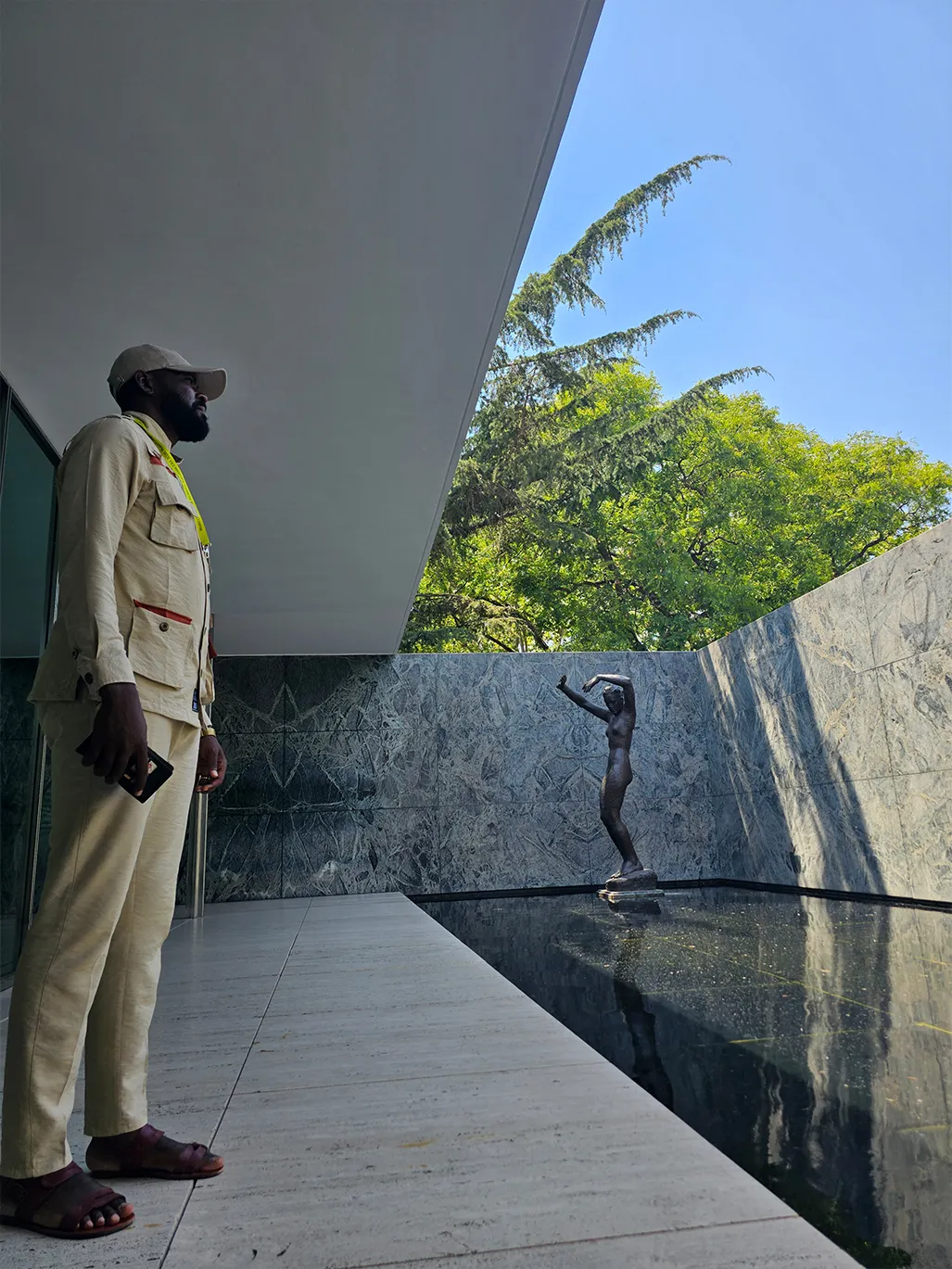
The German Pavilion at Barcelona by Ludwig Mies van der Rohe is considered by the Theory and history of Architecture an explicit manifesto of modernism, expression of elegance, free plan and the „less is more “ dictum. At almost one hundred years from its birth (1928-29) it might become a stage for reflection. At almost five years after its opening, the Germany’s history and not only leaved away elegance and turned to force, racism and Friedrich’s Nietzche Uebermensch. There is a distinct „character” in the pavilion which sudden becomes attractive, it speaks to everybody. Situated at the end of a path - bathed in the ethereal, dynamic light of the intermediate outdoor space and floating upon the deceptive mirror of the water’s surface – it perfectly complements, through antithesis, the pavilion’s refined, abstract spatiality. Tells us about permanence versus transience, about cultural colonialism, about feminism, about the magics of the body and human expression which transcends cultural limitations and differences, and much more. For the thousands of architects who came from all over the world for the UIA Congress in Barcelona in July 2026 the pavilion became one among the attractions.
Beyond „in practice opposed to in theory”, or within this dialectic there are a lot of nuances. And this pavilion, a witness to a century of history fraught with contradictions, continues to serve as an instructive example.