1/1
Text
S
Selected

Author(s) / Team representatives
Borjan Brankov
Profession
PhD, research fellow, architect
Photo/design credits
Borjan Brankov
Text presentation of the author in English
Borjan Brankov, PhD in Architecture and Urbanism, completed his PhD thesis "Development of contemporary models of temporality in the conception of common spaces of multi-family housing" in 2024. Since 2014, he has participated in architectural and urban design competitions, both independently and as a member of author teams, as well as in professional exhibitions. He was the recipient of the Sakura Scholarship from the Embassy of Japan in Belgrade in 2015 for research on architecture in Japan. From 2016-2019, he was a PhD Scholar; from 2019-2023, a Research Assistant; from 2023-2024, a Senior Technical Associate; and from 2024, a Research Fellow at the Institute of Architecture and Urban & Spatial Planning of Serbia (IAUS). He has been part of various research and scientific projects such as the NONA project, Connect GREEN, Attractive Danube (all Interreg Danube projects), Green, livable and resilient cities, Serbia (World Bank), etc. As part of his professional engagement, he works in architectural design and urban planning. He won multiple awards at the International Salon of Urbanism (Serbia).
Text abstract in English
In theory, common areas in multi-family housing from the 20th century were part of the philosophy organizing life in a collective, with the community representing a form of family expansion to a larger number of people who are more socially connected. Benefits of collective living help the family with common facilities, but above all services, to relieve itself of certain obligations, and thus realize the possibility of using free time.
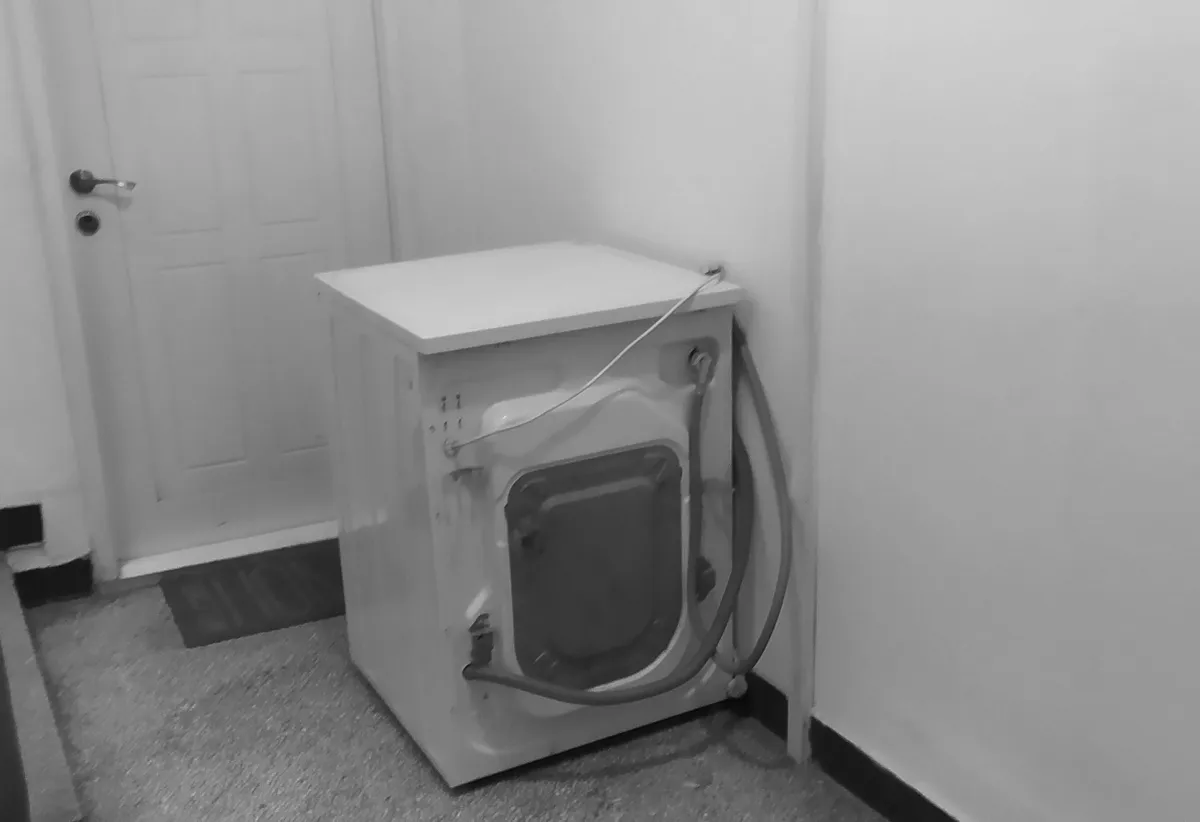
In practice we are witnesing these spaces becoming areas to pass trhough, to ignore everything else, to complain about them as it is always other people’s job to solve the problem, to disregard the value of the space as it is not private, and therefore not valuable for a particular individual, to not comprehend the possible function of the space, and just to practice individual ignorance of living in multifamily buildings. With the most important part being the aggressive appropriation for private purposes.
The text examines the long buildup of chaos in these spaces through 3 distinct reality-inspired situations happening in these spaces, parallel 40 years apart, using New Belgrade’s modernist blocks’ original architecture and subsequent chaotic situations as an inspiration for the story.