1/3
2/3
3/3
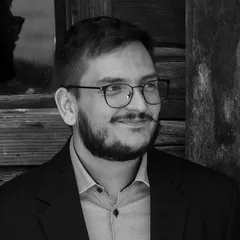
Author(s) / Team representatives
Andrei Chindriș
Profession
Arhitect
Text presentation of the author in English
Andrei Chindriș is an architect and a graduate of the Faculty of Architecture and Urban Planning at Politehnica University Timișoara. He currently works at D Proiect, where he is involved in projects of restoration, adaptive reuse and urban regeneration. He also collaborates with the Faculty of Architecture and Urban Planning in Timișoara, where, together with other colleagues, he coordinates the fifth-year design studio, as well as seminars in urban history and architectural history. Since 2022, he has been part of the team behind the cultural project Ecluze pe Bega, working on research and documentation related to activities carried out along the canal and leading guided tours focusing on its hydrotechnical heritage.
Project description in English.
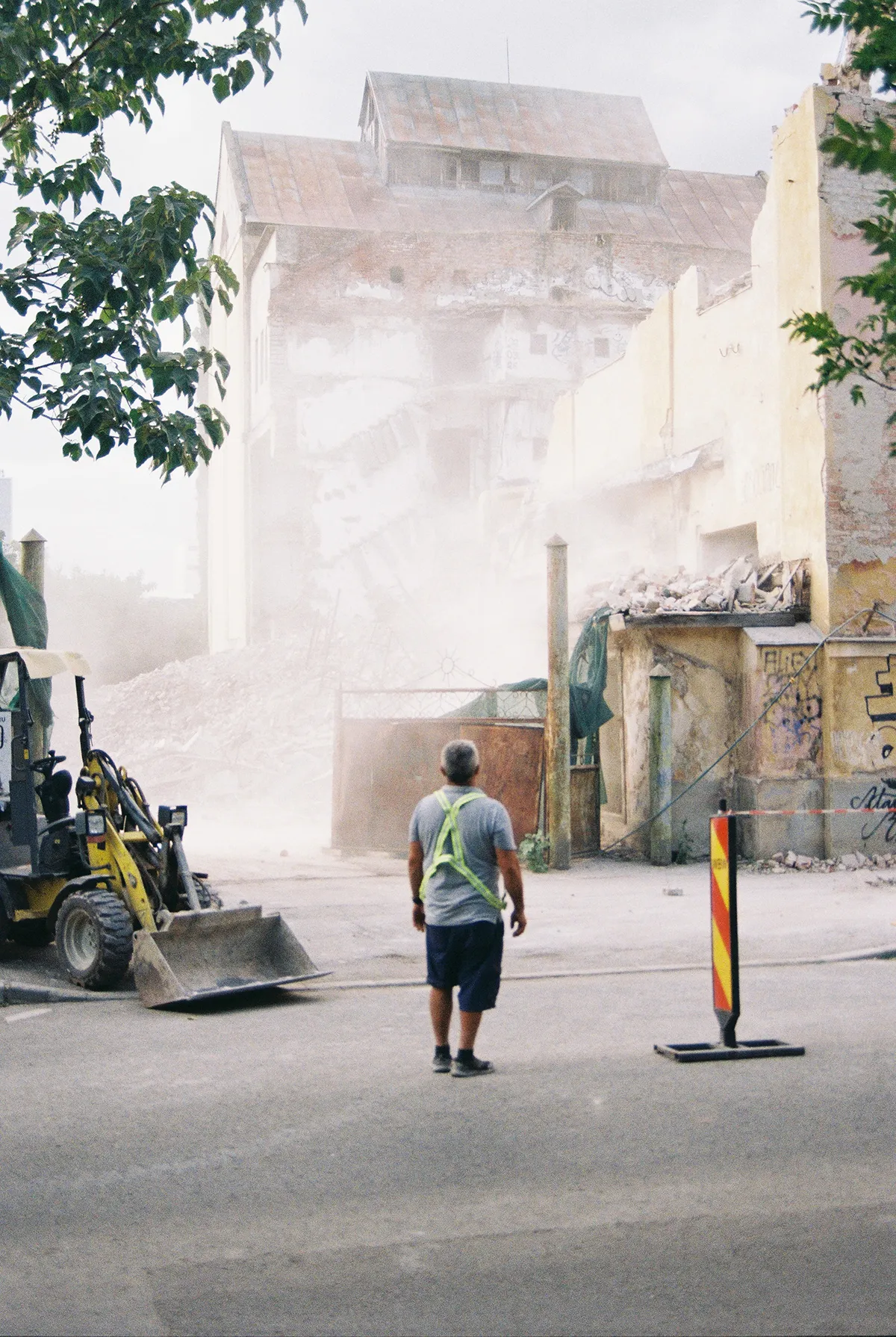
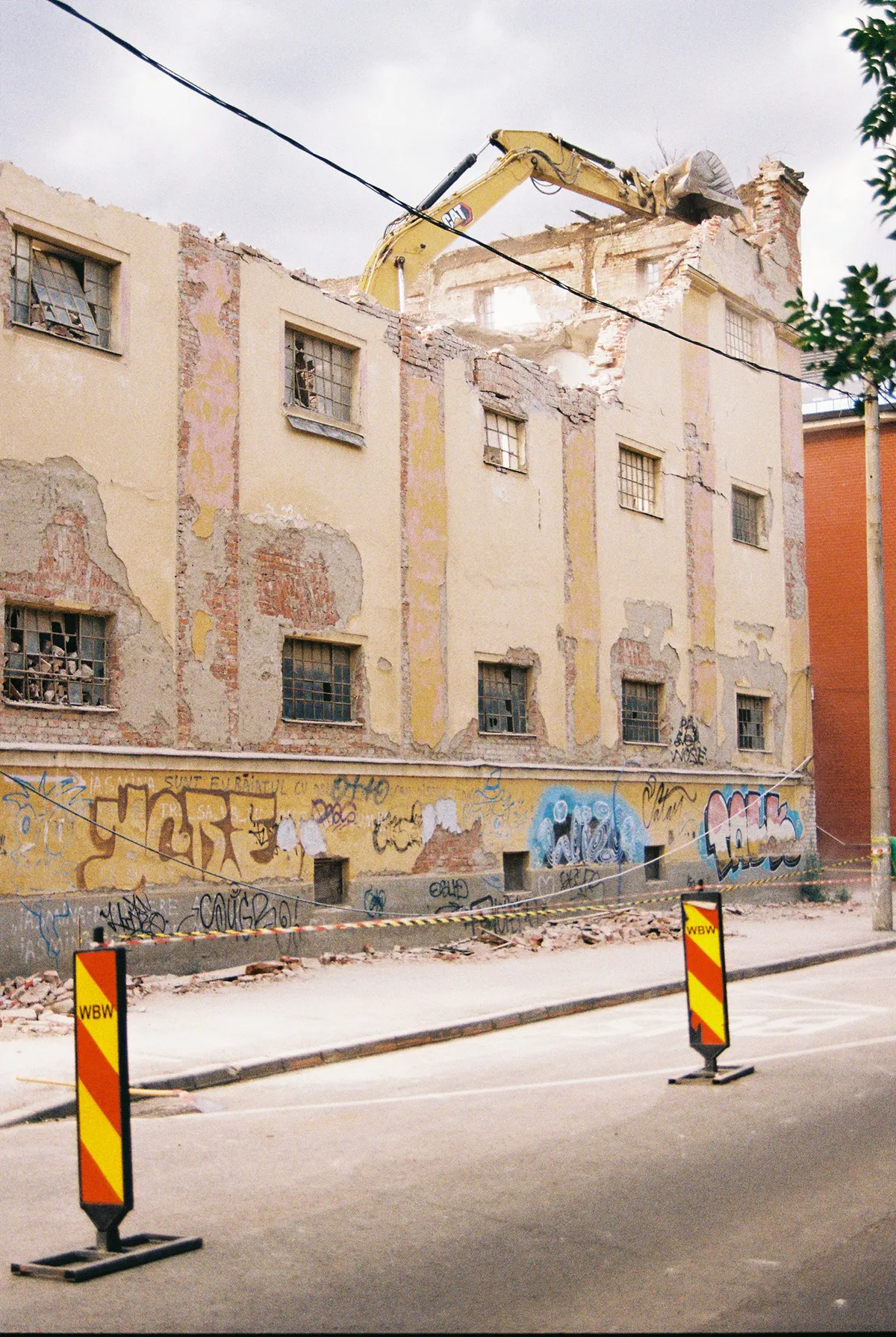
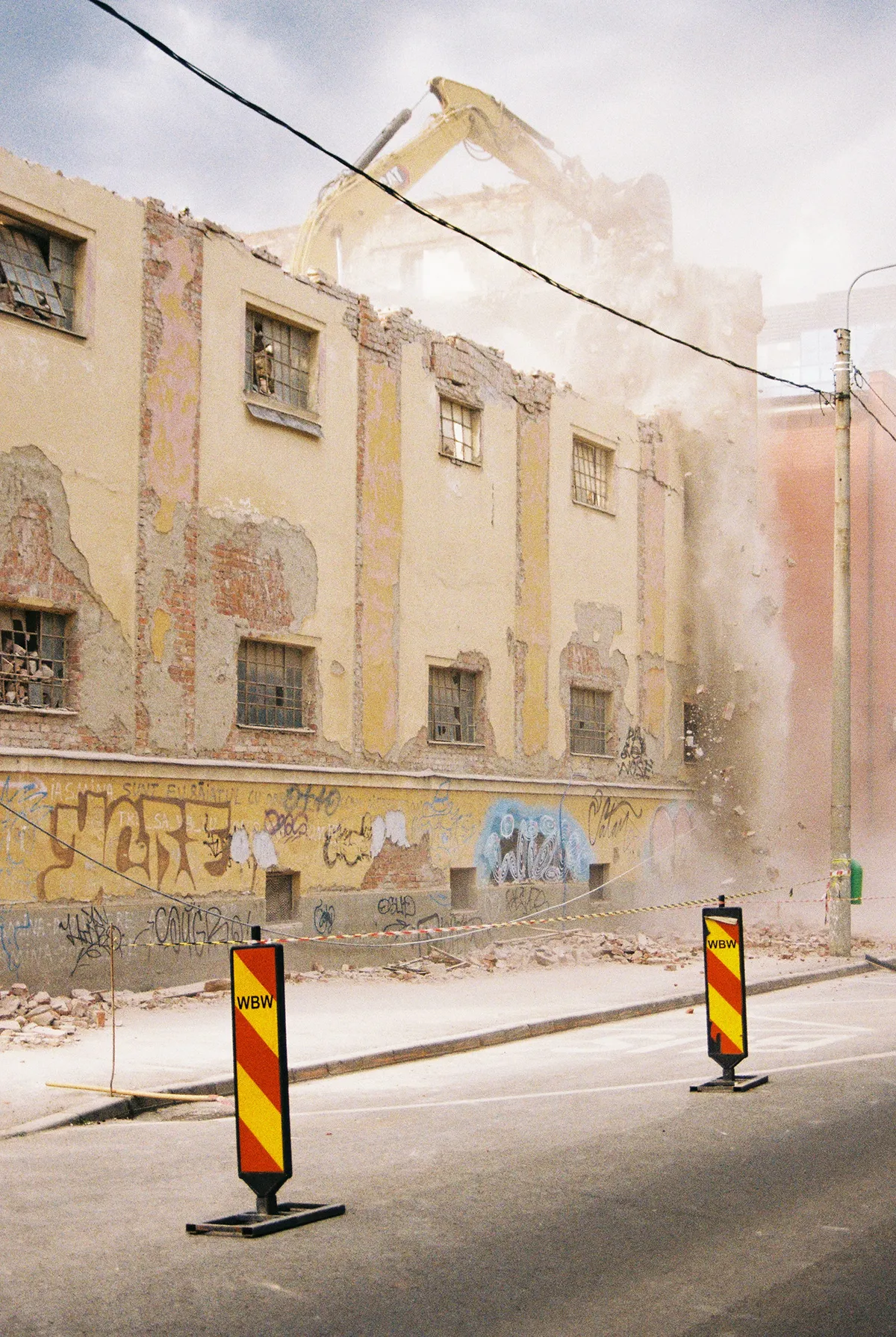
The decommissioning of the building is only the beginning. Years follow, during which it is left at the mercy of environmental factors and indolence. From the outside, the observer is faced with a fact: that the process of decay follows its natural and predictable course, inexorable. Vegetation begins to insinuate itself, the earth slowly covers the traces, water finds its way through every crack. Fungi, mosses, lichens and mould. All the while, architects are developing urban regeneration projects, documentations for securing the building, applications for emergency heritage listing. Zonal development plans emerge from visions of profitability, cloaked in discourses about quality of life and urban accessibility. Approvals and permits are obtained. The authorities have more pressing problems. The city's inhabitants pass by every day, unaware, intrigued. One day, teams of workers arrive in large-scale tracked machinery. The building is about to reach the end of its passage through time. Dematerialisation is rapid, precise, targeted, while the works proceed diligently. The excavators operate, paradoxically, almost surgically. The dust settles. The piles of rubble are removed. In their wake, a vacant lot remains. A void. An absence.
From absence arise questions. About competences and responsibilities. About understanding the urban context. About the relationship with water. About the past and memory. About the relevance of heritage. About restoration and conservation. About what must be preserved. About what can be removed. About the practice of architecture. About education. About development and progress. About the future of human settlements.
As new buildings come to occupy this void, oblivion sets in, and the object survives only in documents. A silhouette in photographs. An outline on old plans. A number in an archive. The observer is once again faced with a fact: the new development makes no reference whatsoever to the memory of the place. The thinking oriented towards a palimpsest-like approach had, in this case, become obsolete. And in the wake of this observation, a dilemma emerges, naturally and legitimately: what, in fact, is gained when something is lost?