1/10
2/10
3/10
4/10
5/10
6/10
7/10
8/10
9/10
10/10
Author(s) / Team representatives
Grbić Milena, Nikezić Ana, Dulić Olivera
Profession
University professors
Project start date
December 2025
Project completion date
June 2026
Photo credits
Olivera Dulić
Text presentation of the author/office in English
Milena Grbić, Ana Nikezić and Olivera Dulić are architects, educators and researchers whose work connects architectural design, pedagogy and socially and environmentally responsible practice. Milena Grbić holds a PhD in Architecture from the University of Belgrade and is Associate Professor at the University of Novi Sad, Faculty of Civil Engineering in Subotica. Her research advances the content, methods and values of architectural education by integrating teaching and research. Ana Nikezić holds a PhD in Architecture and Urbanism and has over 19 years of teaching experience in architectural and urban design at the University of Belgrade, Faculty of Architecture. Her work bridges theory and practice, with particular emphasis on interdisciplinary education, urban culture, climate-responsive design and the relationship between architecture and nature. Olivera Dulić is Associate Professor at the University of Novi Sad, Faculty of Civil Engineering in Subotica, and holds a PhD from the University of Novi Sad, Faculty of Technical Sciences. Her research examines architectural design and its pedagogy, with a particular interest in the role of graphical representation in design processes. Together, the team investigates how contemporary values can be translated into architectural education and spatial practice.
Project description in English
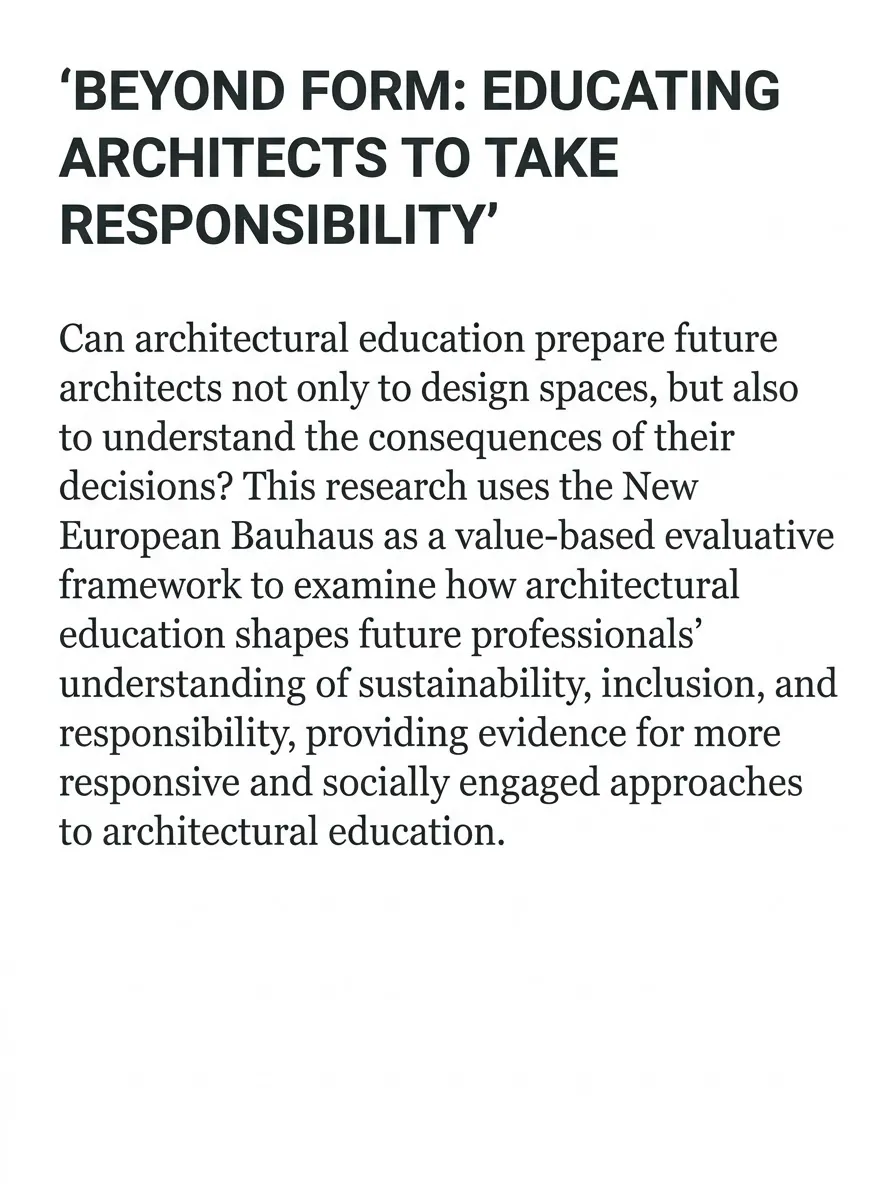
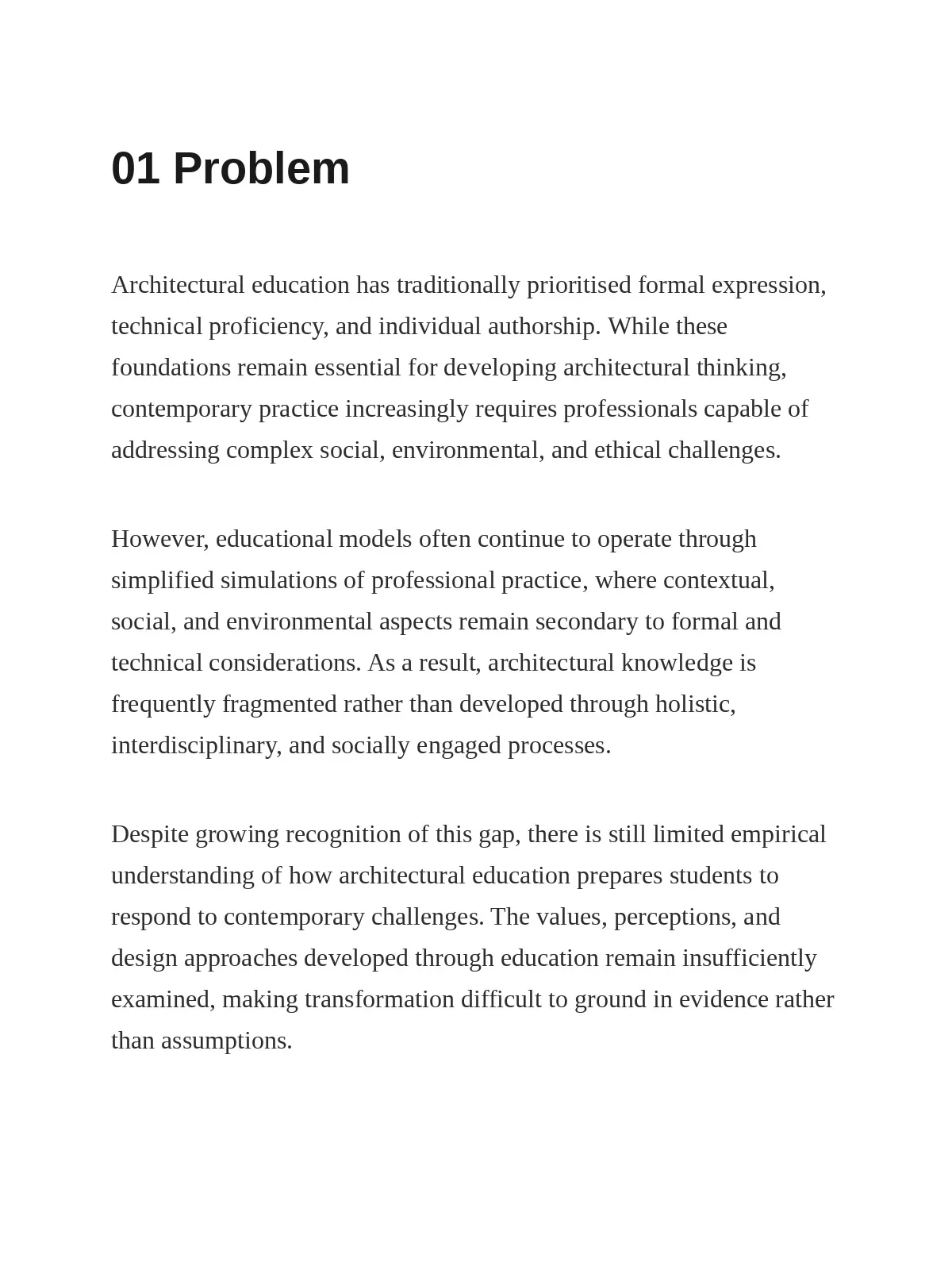
The project “Beyond Form: Educating Architects to Take Responsibility” asks whether architectural education prepares future architects not only to design spaces, but to understand the social, environmental, and ethical consequences of their decisions. Although education has traditionally emphasised formal expression, technical knowledge, and individual authorship, contemporary practice demands responses to issues of sustainability, inclusion, and local communities. Yet empirical insight into how these values are translated into student projects remains limited.
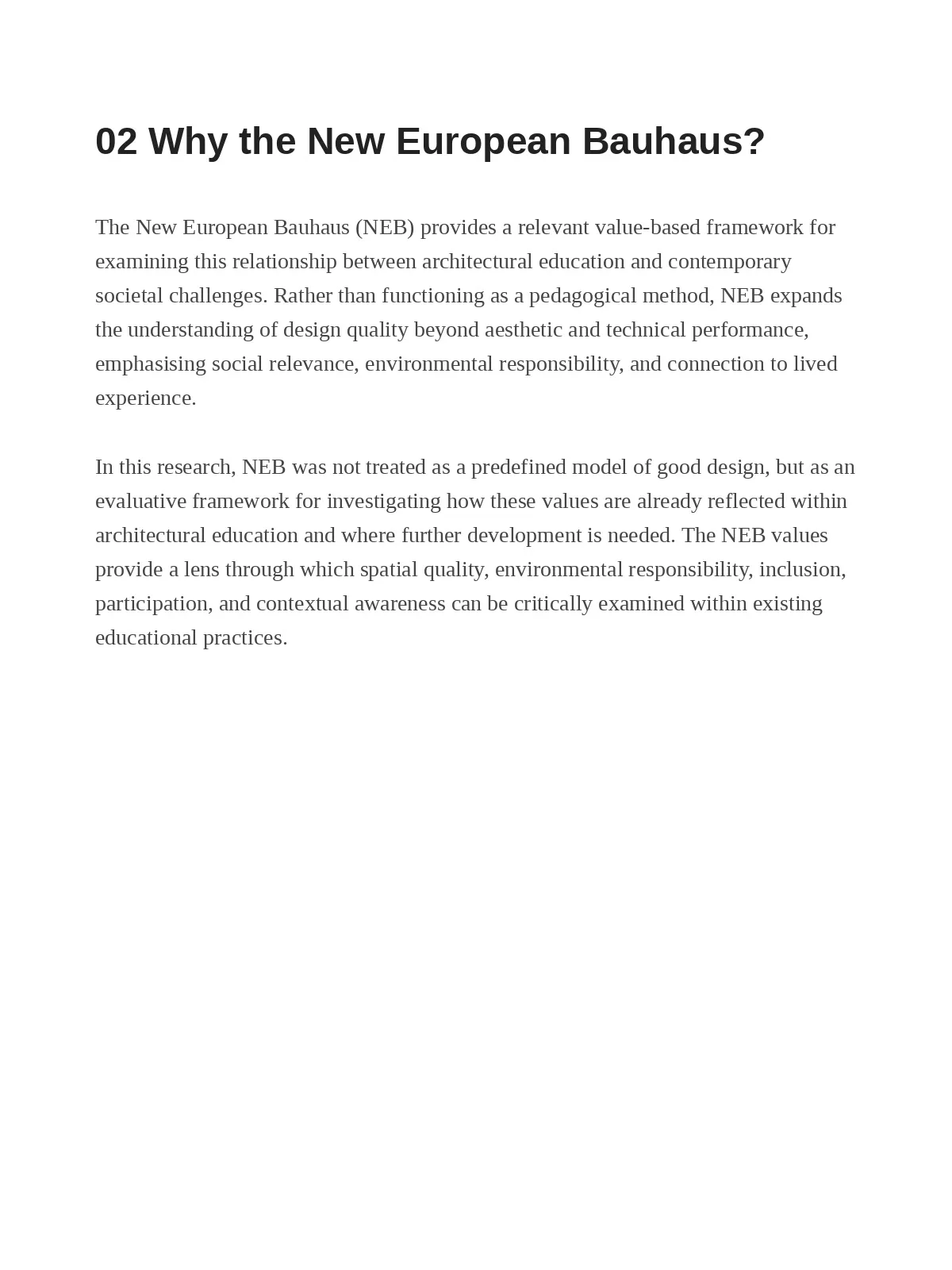
The research uses the New European Bauhaus value framework – Beautiful, Sustainable, Together – not as a predefined model of “good design”, but as an analytical instrument for examining values present in architectural education and those requiring further development. It analyses 28 student projects produced between 2019 and 2024 in undergraduate housing design studios at the University of Belgrade – Faculty of Architecture and the University of Novi Sad – Faculty of Civil Engineering in Subotica. Since the design briefs were not based on NEB principles, the framework was applied retrospectively, combining spatial, environmental, and social assessment with qualitative interpretation and quantitative comparison.
The findings reveal an imbalance between different dimensions of responsibility. The projects demonstrate an understanding of spatial quality, experience, place identity, and engagement with communities, while environmental responsibility is less often embedded as a principle that generates design decisions. Sustainability is acknowledged in the analysed projects, but not yet consistently translated into the logic of design thinking. Comparing the two educational contexts shows that different teaching approaches cultivate different forms of awareness – from social inclusion to connecting architecture with local communities and everyday life.
The project makes visible the gap between knowing about responsibility and designing through responsibility. Its contribution lies in treating sustainability and social responsibility not as additional criteria checked at the end of the process, but as generative principles of architectural concepts. The proposed framework offers a basis for rethinking teaching models and can be adapted to different educational contexts, enabling further investigation into how architectural values emerge, are transmitted, and become spatial practice.