Text presentation of the author/office in English
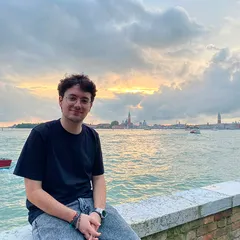
My name is Șerban Surugiu, and I am a first-year student at the Faculty of Architecture and Urbanism (Politehnica University of Timișoara). I am an open, friendly, and curious person, primarily drawn to new experiences that challenge me to continuously learn and step outside the strictly academic zone.
I have always been active, getting involved in volunteering since high school within an association by and for young people, a context that taught me how to communicate effectively, work in a team, and take on responsibilities. One of the experiences I have enjoyed the most since starting university was participating as a volunteer in 'Animă', a project through which we tried to reactivate and improve some of the spaces of the Faculty of Architecture and Urbanism. I was involved both in the design phase and in the actual execution of the project. For me, it was interesting to see how an idea drawn up and discussed with others takes shape in reality and, inevitably, changes along the way.
I want to participate at the BETA Awars for the experience itself, for the people I can meet, and for the chance to see architecture beyond what I learn in university. I believe it is the kind of experience from which I can learn a lot and to which, at the same time, I would love to contribute.
Project description in English
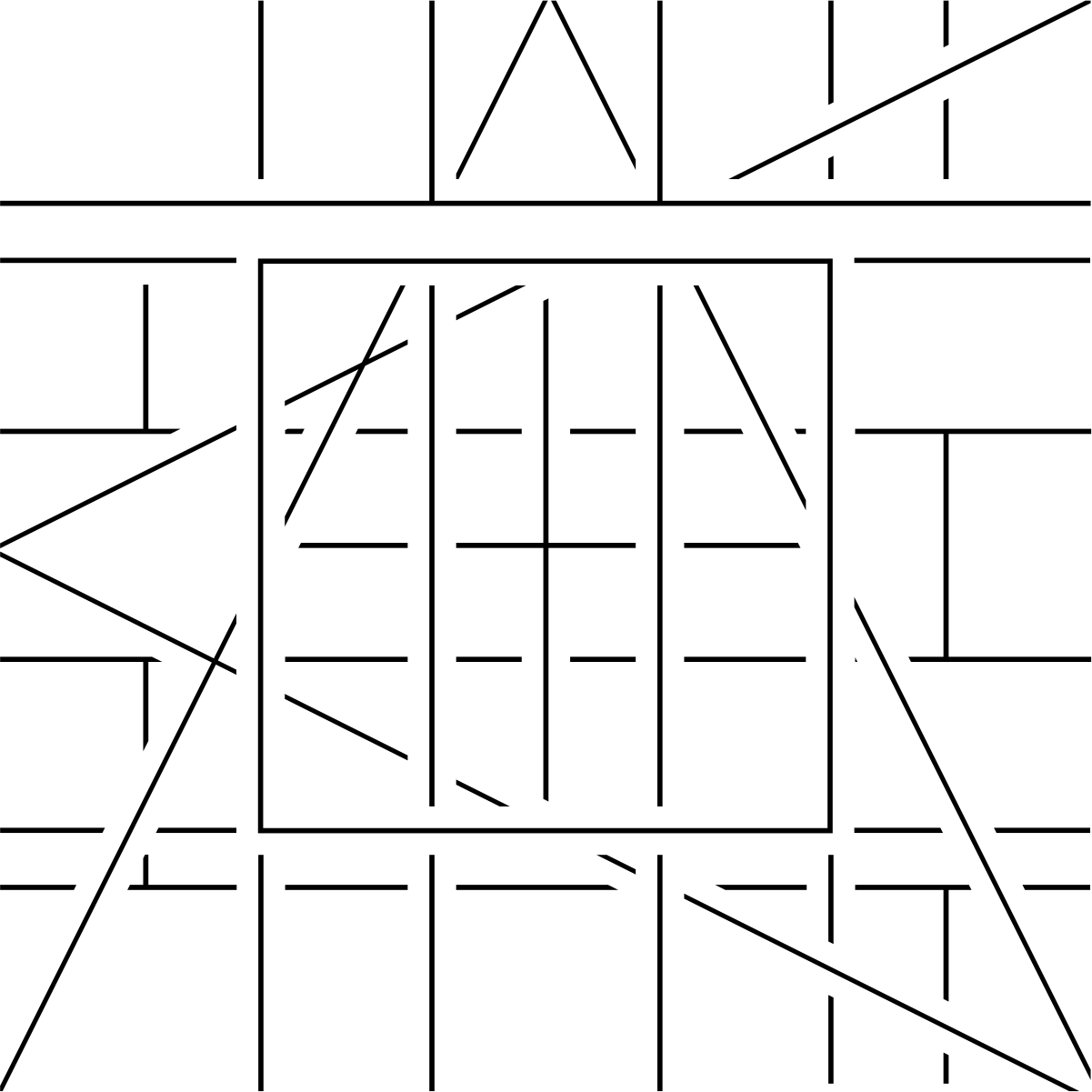
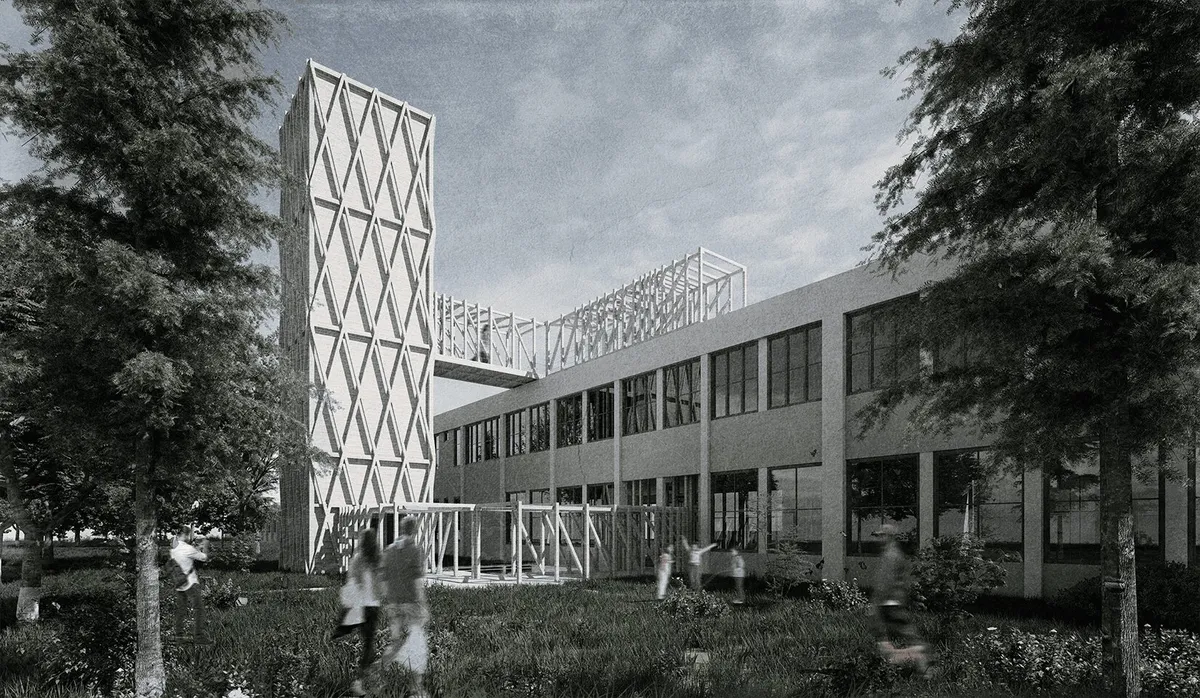
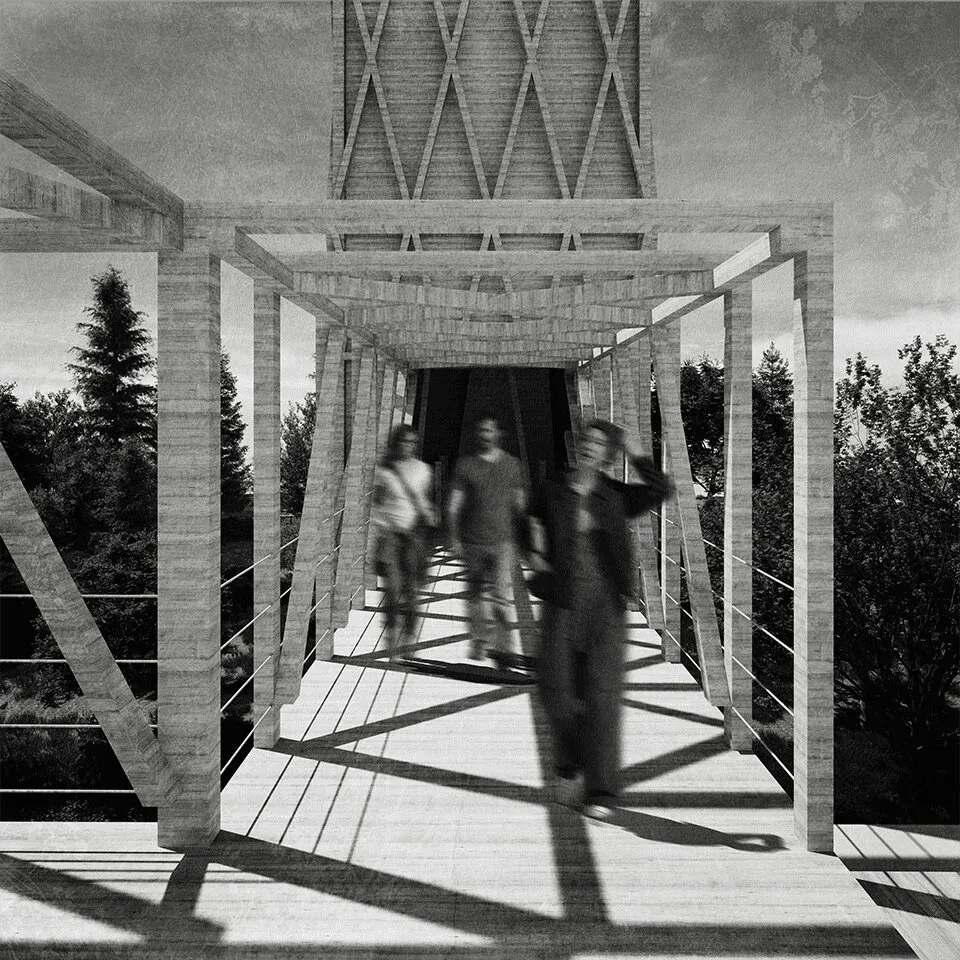
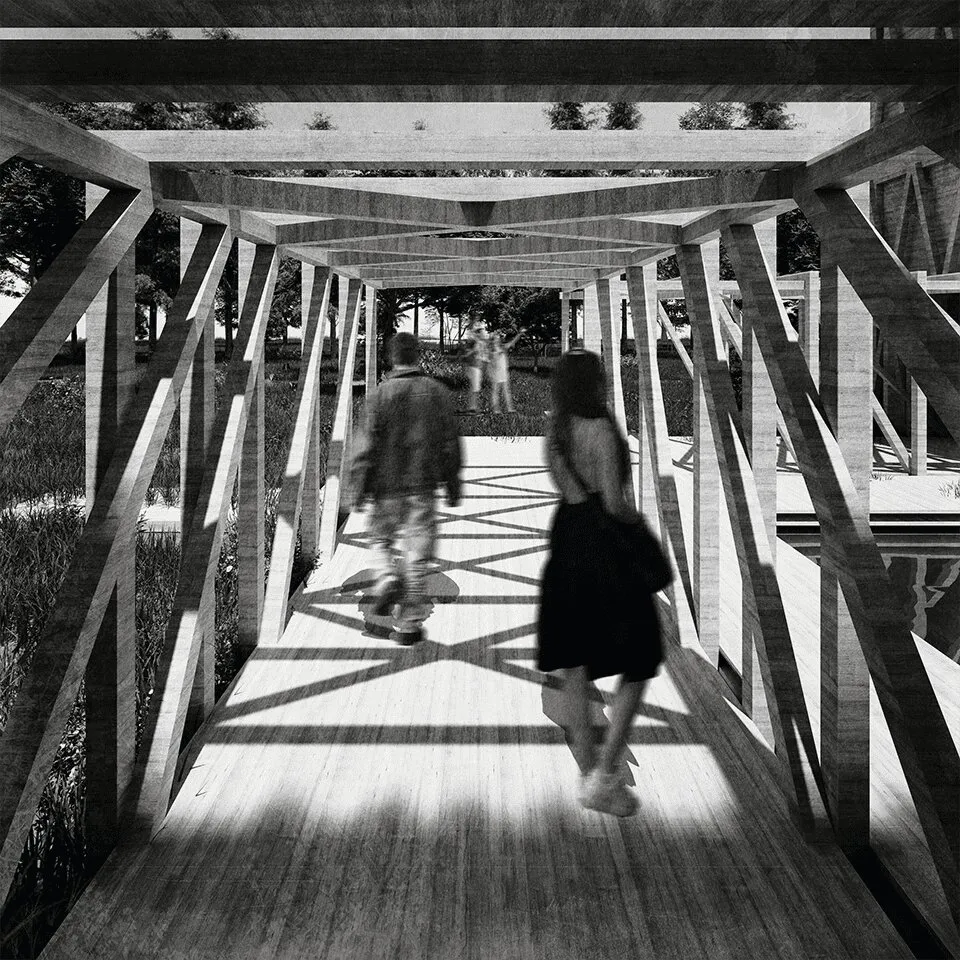
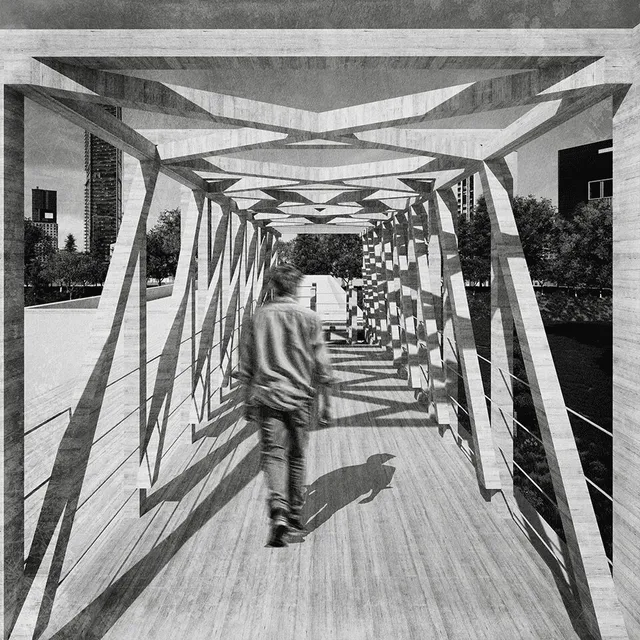
Conceived as an extension of the "Ion Mincu" High School from Timișoara, Romania, the project establishes a clear and accessible route that connects the school, the botanical park, and their users. Based on a square plan with square-shaped tunnels, the design echoes the repetitive structural bays of the existing historical building. Situated on a naturally shaded site, the architecture uses light as a spatial guide through a precise sequence: four tunnels where light progressively decreases through transitions of penumbra and shadow, leading into an opaque, vertical tower.
Acting as a visual landmark and circulation core, the tower features a singular zenithal light opening that draws visitors upward to the high school's terrace. The route continues through subsequent tunnels, the building's interior descent, and a final path, transforming circulation into an active public space. In accordance with Baukultur principles, the intervention enhances the quality of the built environment by respecting the historical context through a cohesive geometry. It promotes social inclusion, spatial diversity, and a meaningful dialogue between architecture, landscape, and human activity.