1/10
2/10
3/10
4/10
5/10
6/10
7/10
8/10
9/10
10/10

Author(s) / Team representatives
Timea Borșan
Profession
Arhitect
Co-authors/team members
Îndrumător: Ș.l.dr.arh. Claudiu Toma
Project location
Băița, Hunedoara, România
Area
3600 mp
Project start date
Septembrie 2025
Project completion date
Iulie 2026
Website
Photo credits
©Timea Borșan
Text presentation of the author/office in English
Timea Borșan is an architecture graduate from the Faculty of Architecture and Urbanism in Timișoara. Her practice brings together architecture, artistic expression, and research, with a particular interest in cultural heritage, textiles, and the relationship between space, materiality, and human experience. Through her work, she explores creative processes and interdisciplinary collaboration as tools for designing and interpreting the built environment.
Project description in English
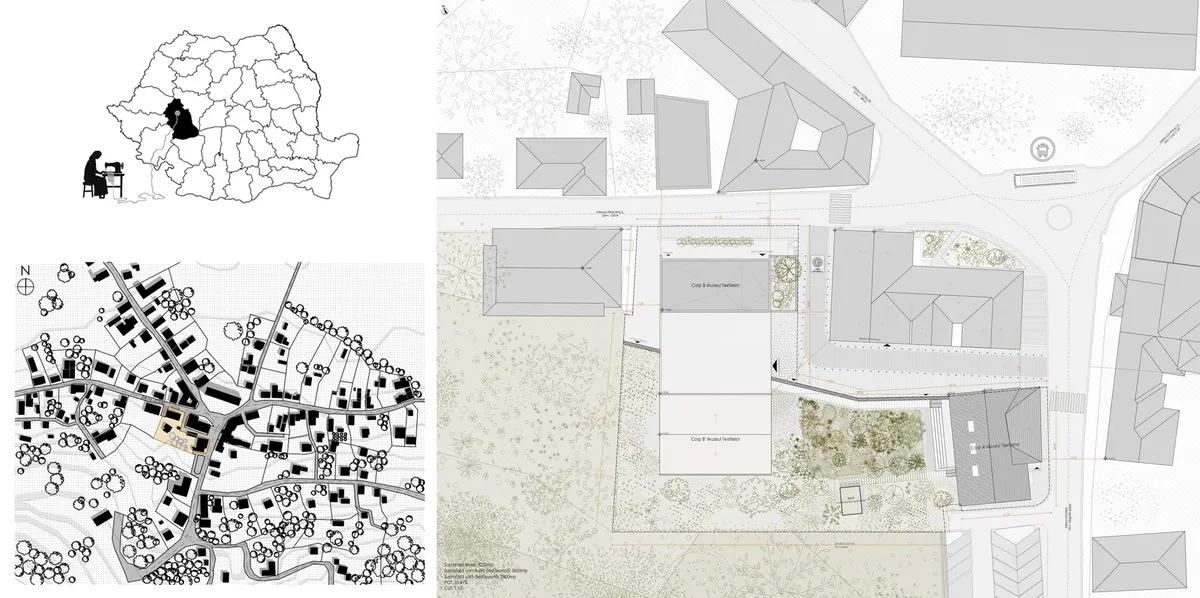
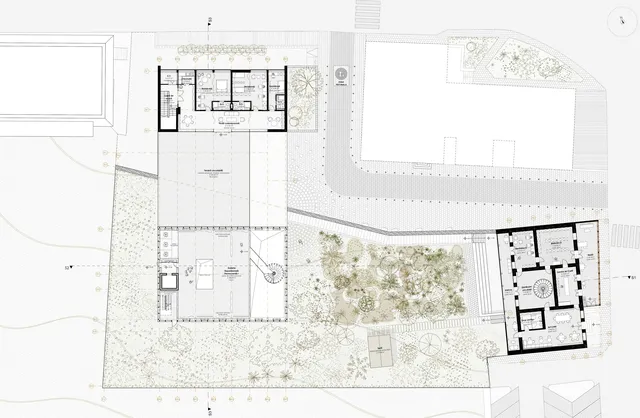
The project proposes expanding the Textile Museum in Băița, Hunedoara, by reorganizing the existing complex and adding a new wing.
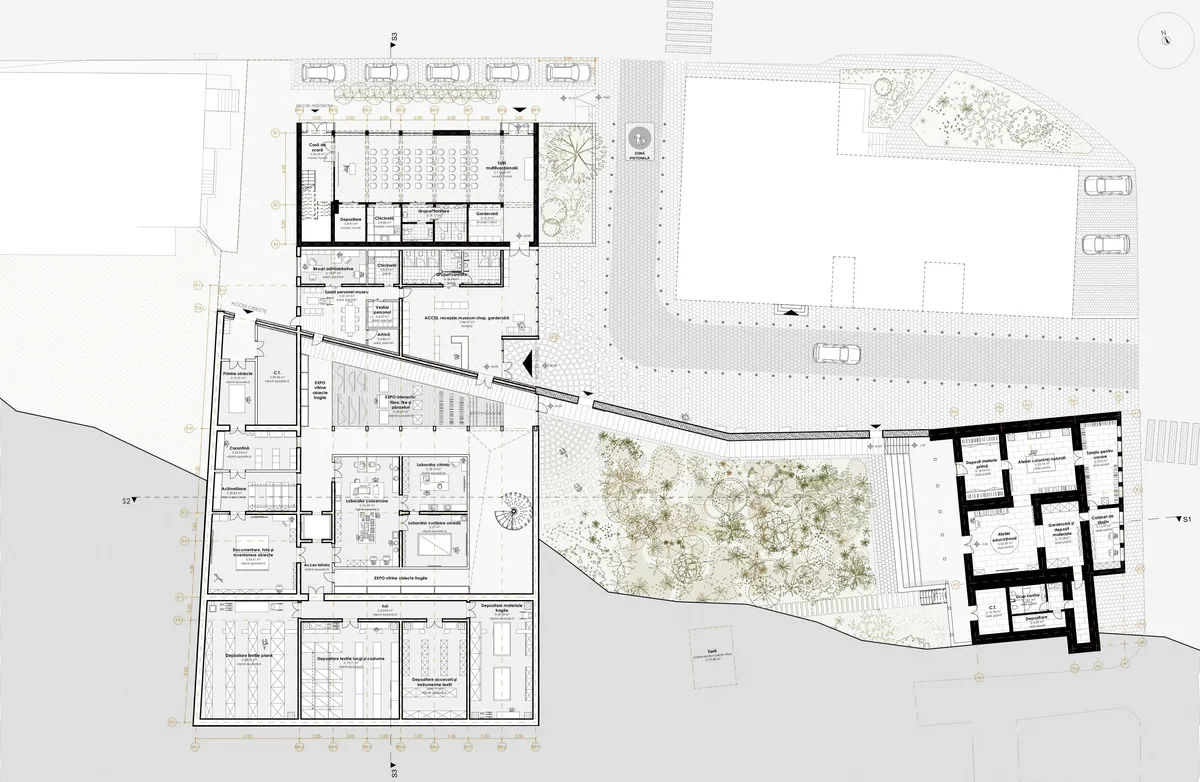
The project preserves the existing two buildings that define the site and assigns them complementary roles within the new program. The traditional house, Building A, houses the publicly accessible areas, bringing together the Art Café, the library, and the workshops dedicated to textile practices. Building B is occupied by the multifunctional space and residencies for artists and researchers. Between the existing buildings and the new addition, a dye garden has been created, featuring plants used to produce natural dyes.
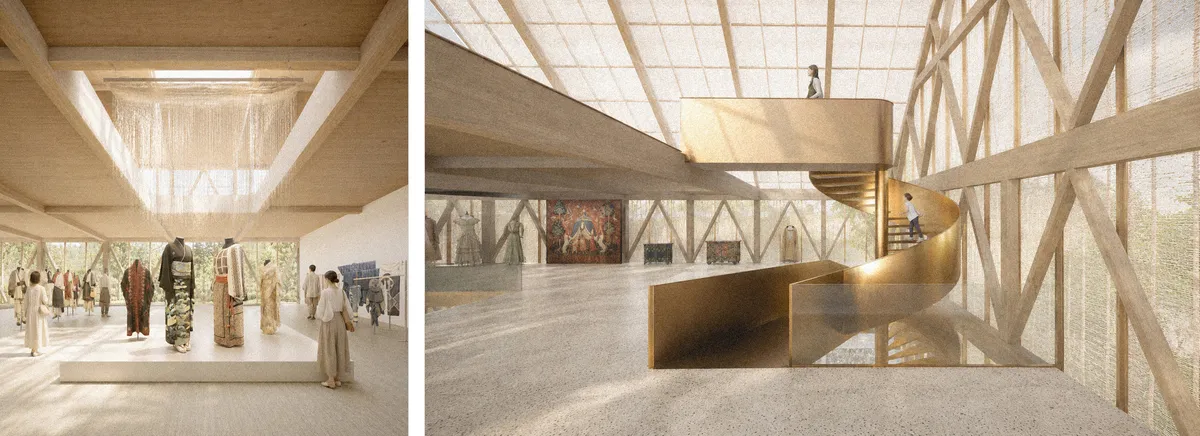
The new building (B') houses the museum functions that require specific conditions for conservation and display. The collection is housed within a mineral plinth, whose design reinterprets the existing stone fence. Above it, the glass envelope is lined with an exterior textile membrane. The wooden structure remains visible through the façade, giving the upper section the character of a light and permeable architecture.
The spiral staircase is centrally located and architecturally reflects the rotational movement of the spindle. It connects the spaces dedicated to the collection with the exhibition areas.
By distributing the program among the existing buildings, the garden, and the new wing, the project approaches the museum as a whole, where the textile heritage is preserved, studied, and conveyed through direct experience with the material and the practices associated with it.
The proposed architecture supports a mission already embraced by the Textile Museum: that of viewing local heritage beyond the region’s geographical boundaries. From Băița, within the cultural context of the Zarand region, Romanian textiles are presented alongside international collections, in a setting that allows them to be interpreted as part of a universal textile culture.