Text presentation of the author/office in English
An architect dedicated to the research and revitalization of industrial heritage, he approaches architecture through the lens of spatial planning and long-term strategic vision. As a member of the Non-Formal Spatial Planning Workshop, his work intersects territorial analysis, urban intervention, and the regeneration of forgotten or underutilized sites.
His activity is anchored in the rehabilitation and adaptive reuse of former industrial platforms. His bachelor's thesis explored the reintegration of the Reșița Steelworks site into the urban fabric—an area of outstanding historical and spatial value. Through this approach, he formulated intervention hypotheses that respect local identity while proposing viable contemporary functions.
His commitment to the industrial fabric is backed by a solid, interdisciplinary theoretical foundation. This expertise allows him to analyze urban dynamics in depth, ensuring they are directly anchored in the physical, social, and economic realities of each intervention site.
Project description in English
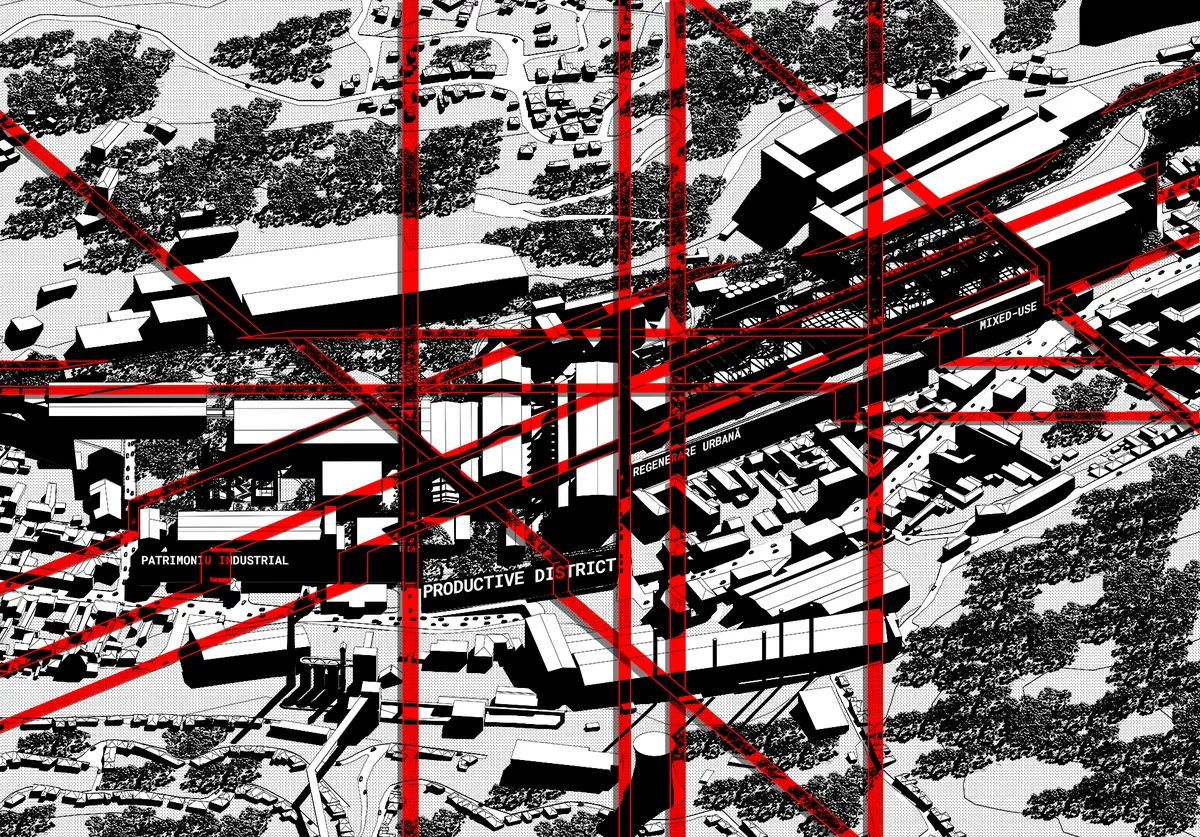
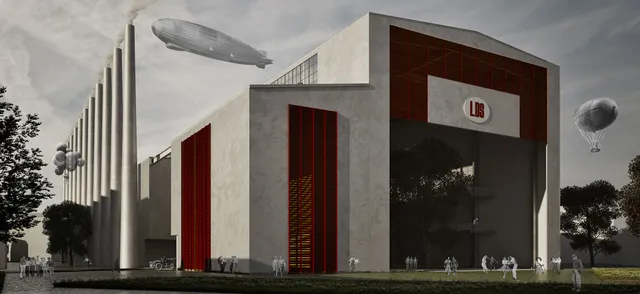
The diploma thesis, coordinated by Assoc. Prof. Dr. Arch. Marius Găman, proposes a strategy for revitalizing the industrial heritage of the municipality of Reșița. The intervention focuses on the southern platform of the Reșița Steelworks (CSR), aiming to transform an underutilized and isolated territory of 28.80 hectares into a contemporary mixed-use neighborhood. The central objective of the research and spatial proposal is to combat demographic decline, the loss of productive functions, and the identity fragmentation of the city. The author avoids radical solutions of mass demolition or passive museumification, opting instead for an adaptive and flexible conversion capable of turning industrial memory into an active economic and social resource.
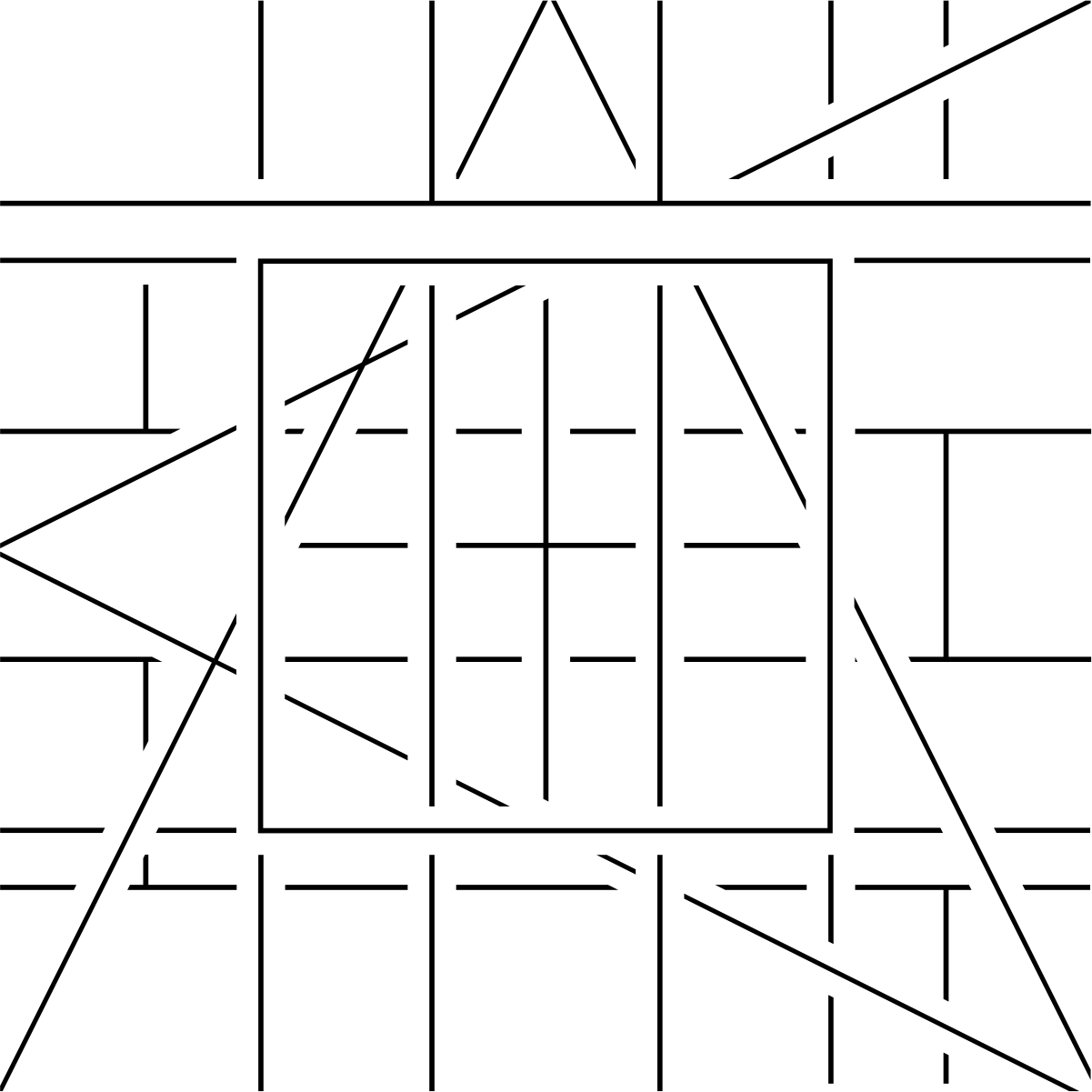
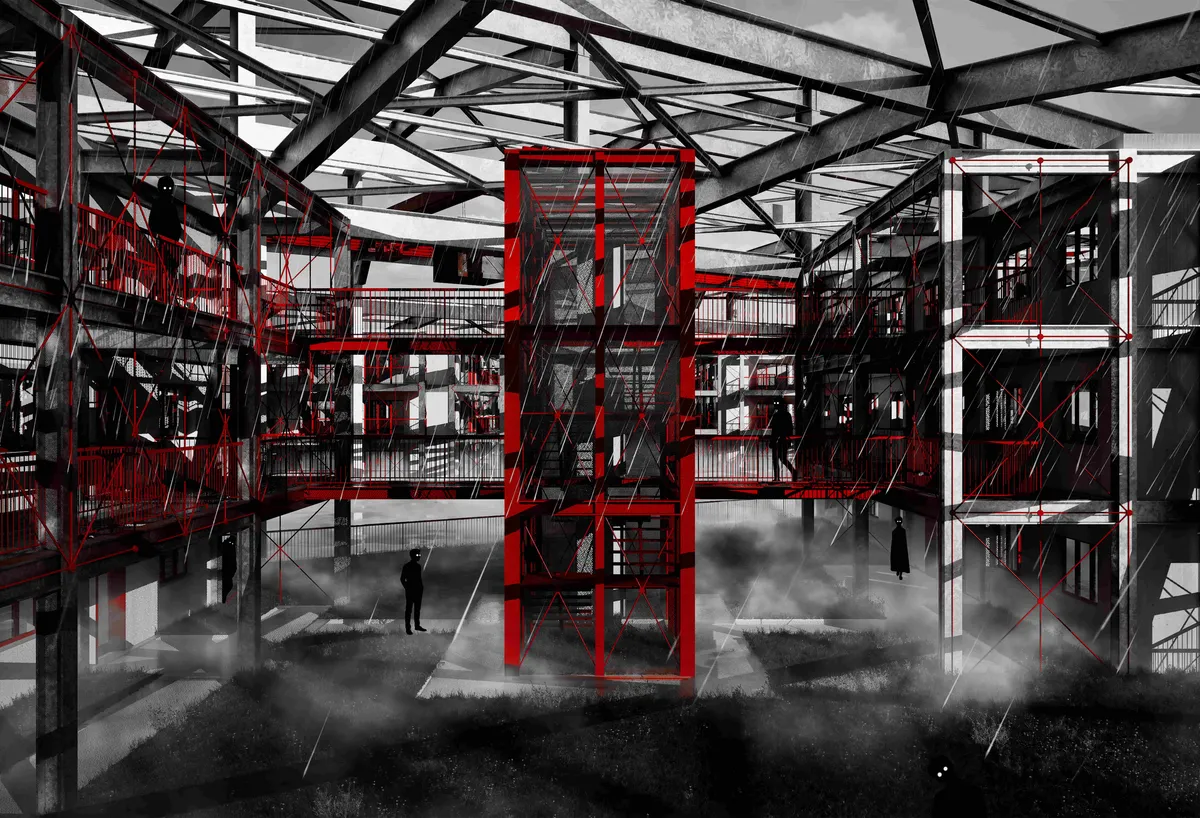
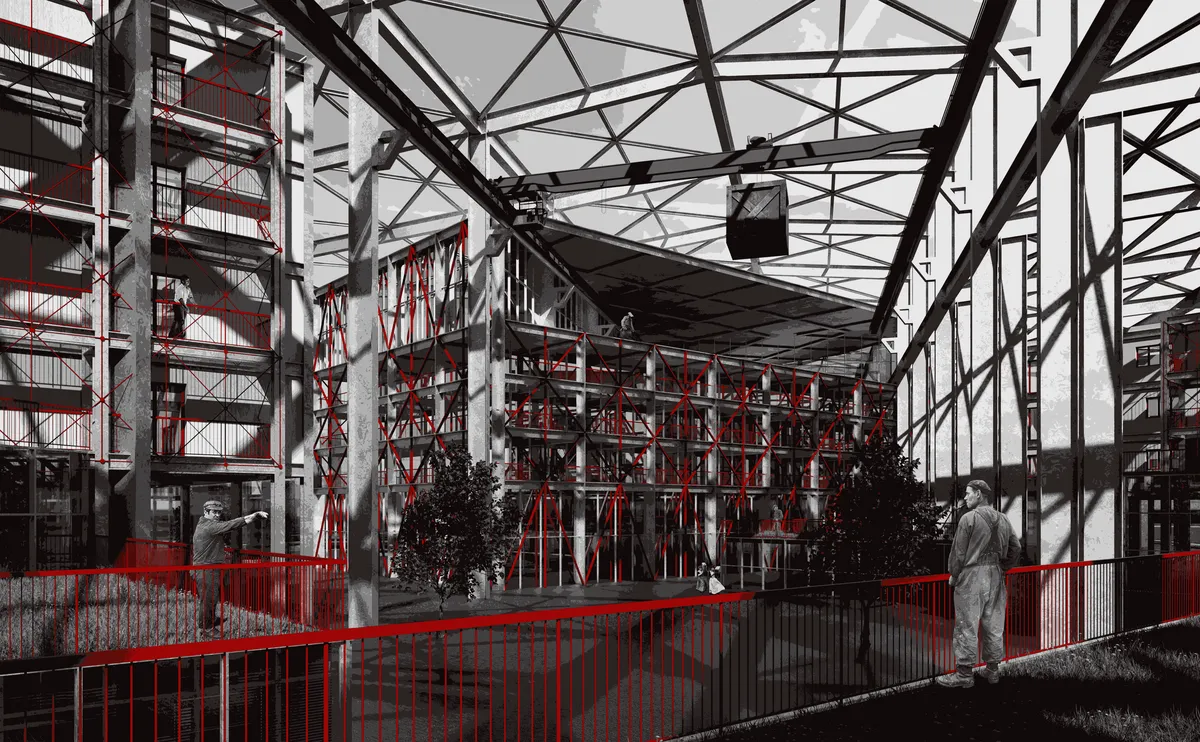
The general intervention strategy is founded on three theoretical and conceptual pillars that redefine the relationship between the community and the industrial space. The first pillar, "Productive City," aims to reintegrate clean and creative production into the urban fabric to transform the site into a local economic engine. The second pillar, "Regenerative Tourism," focuses on transforming historical structures, such as halls and blast furnaces, into tourist and cultural infrastructure capable of attracting visitors and generating new interactions. Finally, "Human Scale Development" proposes reducing the monumental scale of the halls and adapting public spaces to user needs by inserting intermediate spaces, courtyards, and green pockets.
At the urban and landscape level, the project proposes eliminating rigid physical barriers to ensure continuous pedestrian accessibility and promotes alternative mobility through bicycle lanes and shared street profiles. The proposal integrates a network of flexible mineral spaces intended for events and a participatory component, which entails the mandatory involvement of the community in strategic decisions. Through this cultural, productive, and residential mix, the project offers a sustainable model for the post-industrial regeneration of Reșița's largest development engine.