1/10
2/10
3/10
4/10
5/10
6/10
7/10
8/10
9/10
10/10

Author(s) / Team representatives
Radu Dumitran
Profession
Architect, graduate of Ion Mincu University of Architecture and Urbanism, Faculty of Architecture
Project location
Timișoara, Romania
Project start date
September 2025
Project completion date
July 2026
Photo credits
Radu Dumitran
Text presentation of the author/office in English
Radu Dumitran recently graduated from the "Ion Mincu" University of Architecture and Urbanism. His work explores the relationship between architecture, memory, and representation, combining theoretical research with visual experimentation as complementary tools within the design process.
His interests focus on industrial heritage, adaptive reuse, and the dialogue between contemporary interventions and the existing layers of the city. Alongside architectural design, he develops architectural visualization projects and graphic explorations, approaching representation as a tool for research, design, and communication rather than mere illustration.
He is interested in interdisciplinary collaboration and in working alongside people who value experimentation, critical thinking, and meaningful dialogue. He believes architecture becomes relevant when it creates connections between ideas, people, and places, and he aims to develop his professional practice in this direction.
Project description in English
Cities rarely disappear through demolition; they evolve through continuous overwriting. Every abandoned infrastructure preserves, at once, what it once was and what it has not yet become. The former Tram Depot in Timișoara embodies precisely this condition: an industrial territory where memory operates not as a relic, but as a design instrument.
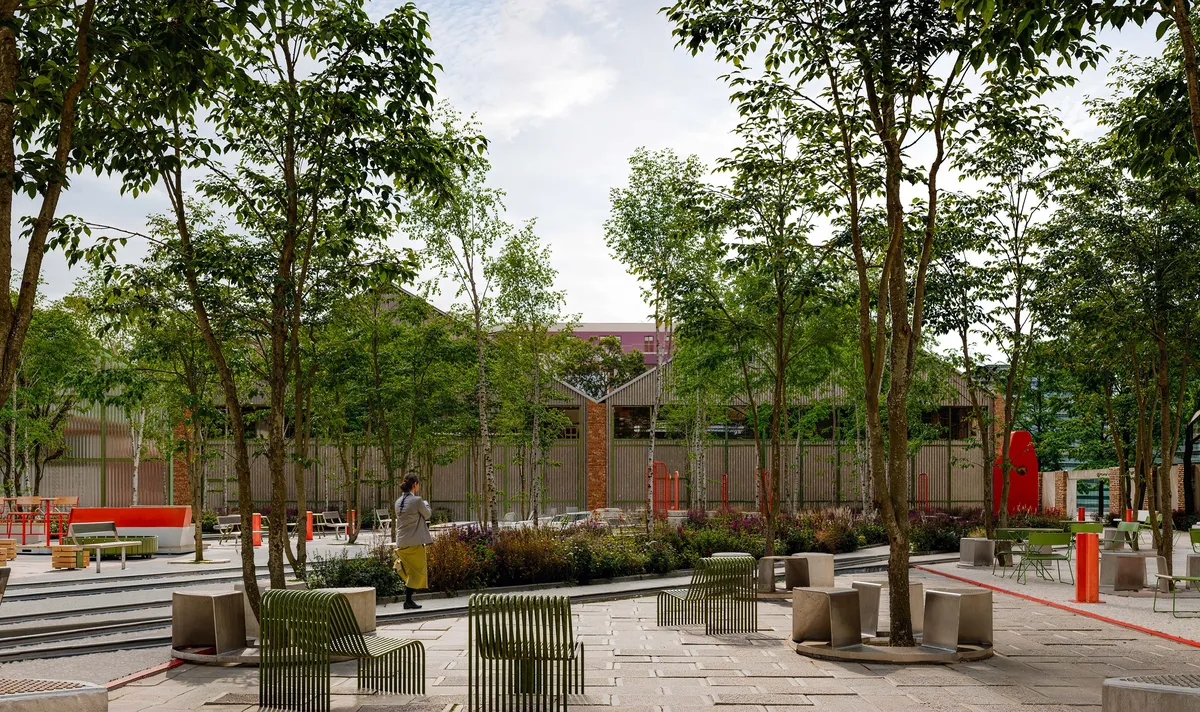
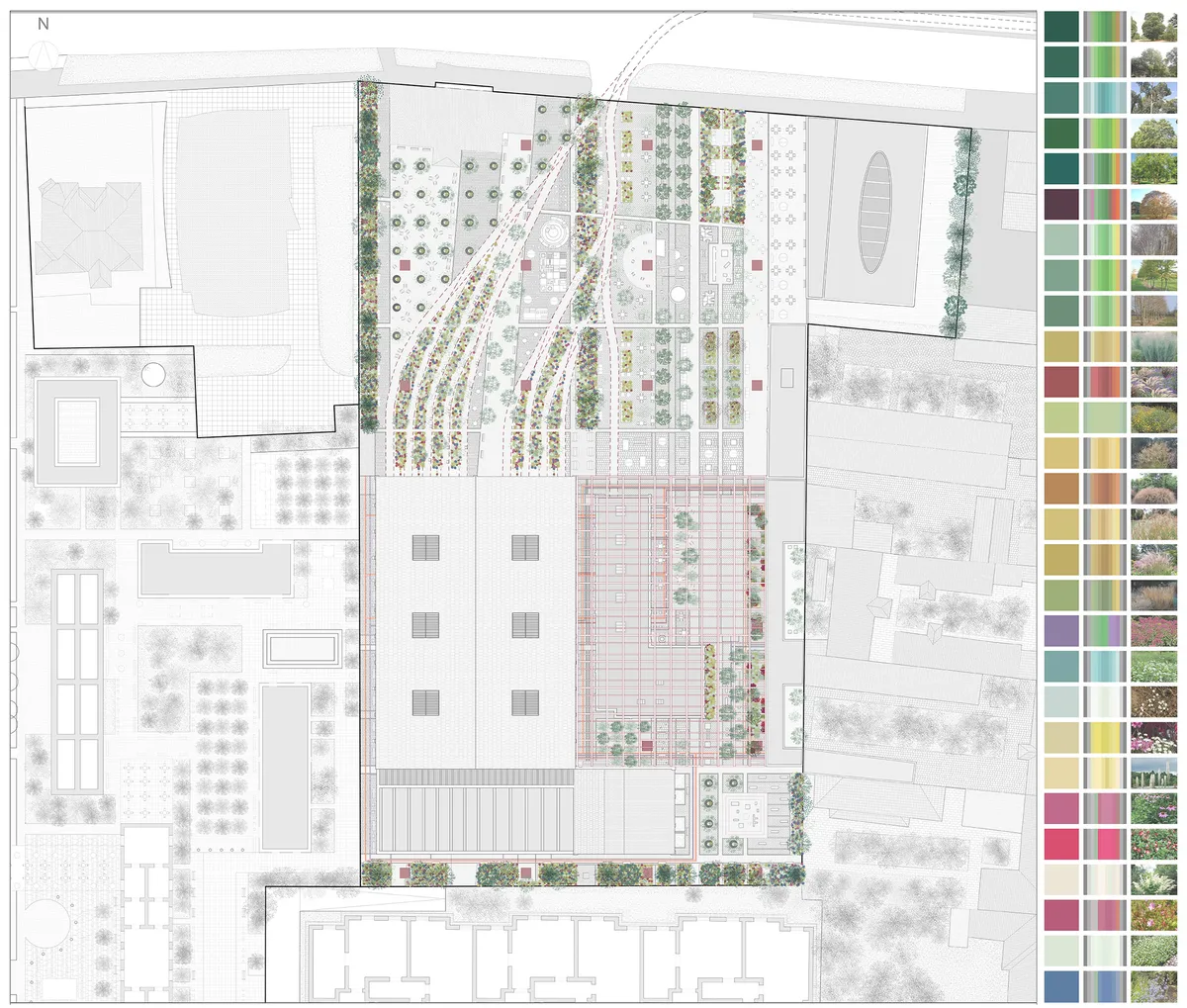
SCENE+ is neither a restoration project nor the replacement of the existing fabric with a contemporary image. Instead, it operates within the tension between permanence and transformation, treating industrial heritage as an open system capable of generating new urban relationships without relinquishing its identity. Architecture does not simply fill existing voids; it transforms them into mechanisms for spatial production.
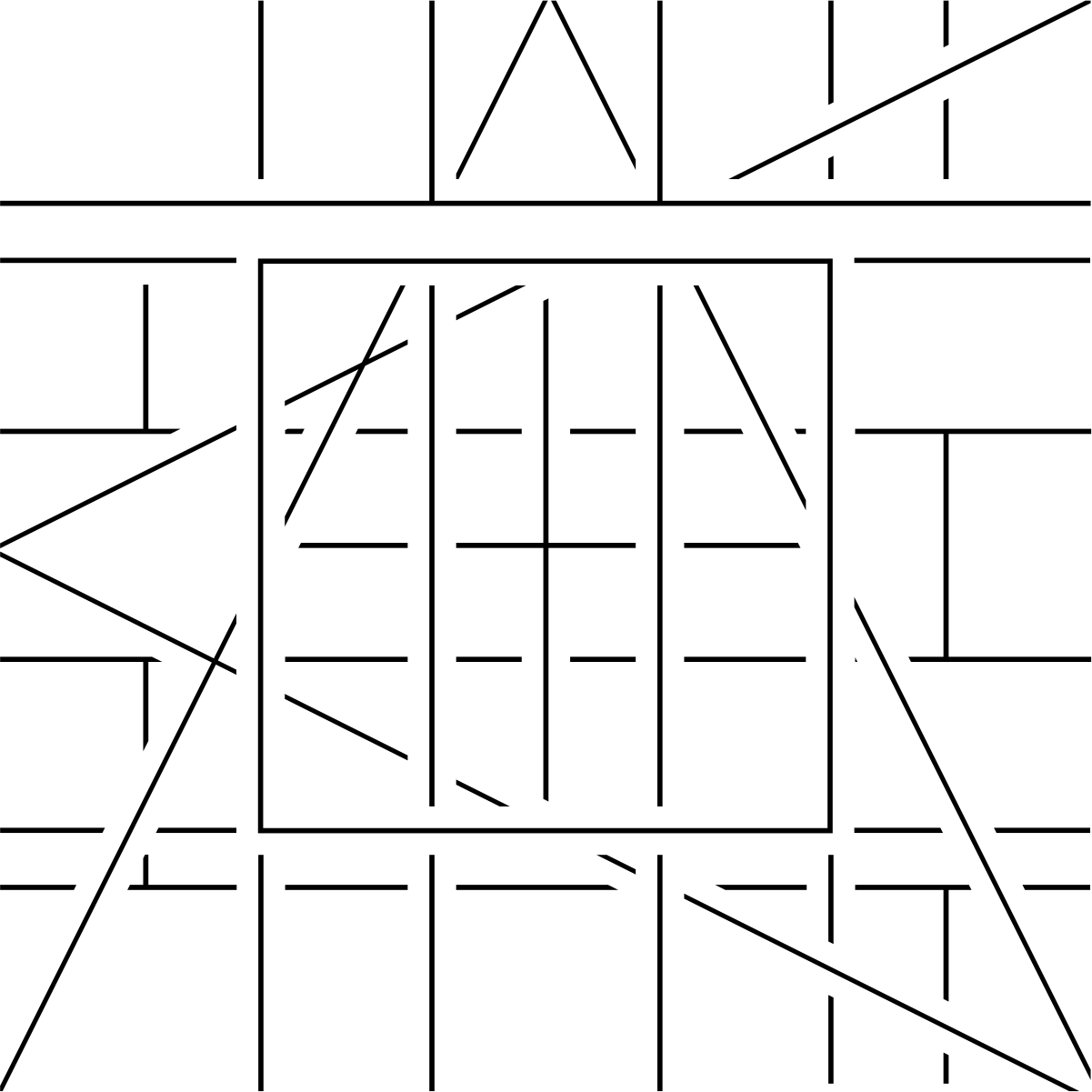
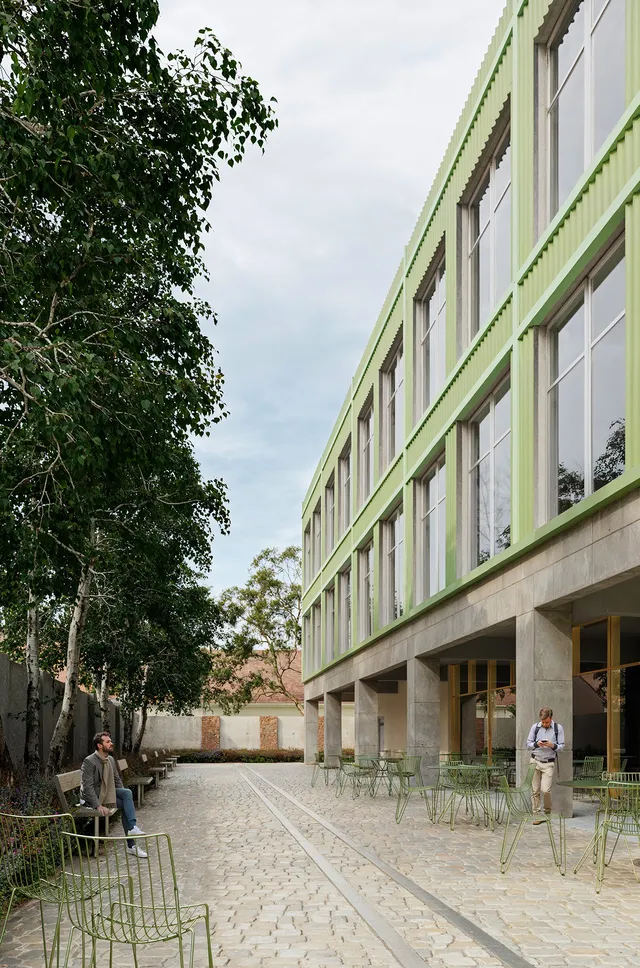
The new interventions deliberately avoid formal continuity with the historic structures. They emerge as autonomous, almost foreign objects whose presence exposes the distance between different historical layers, turning contrast into a compositional strategy. The site becomes an active palimpsest where old and new coexist not through reconciliation, but through continuous negotiation.
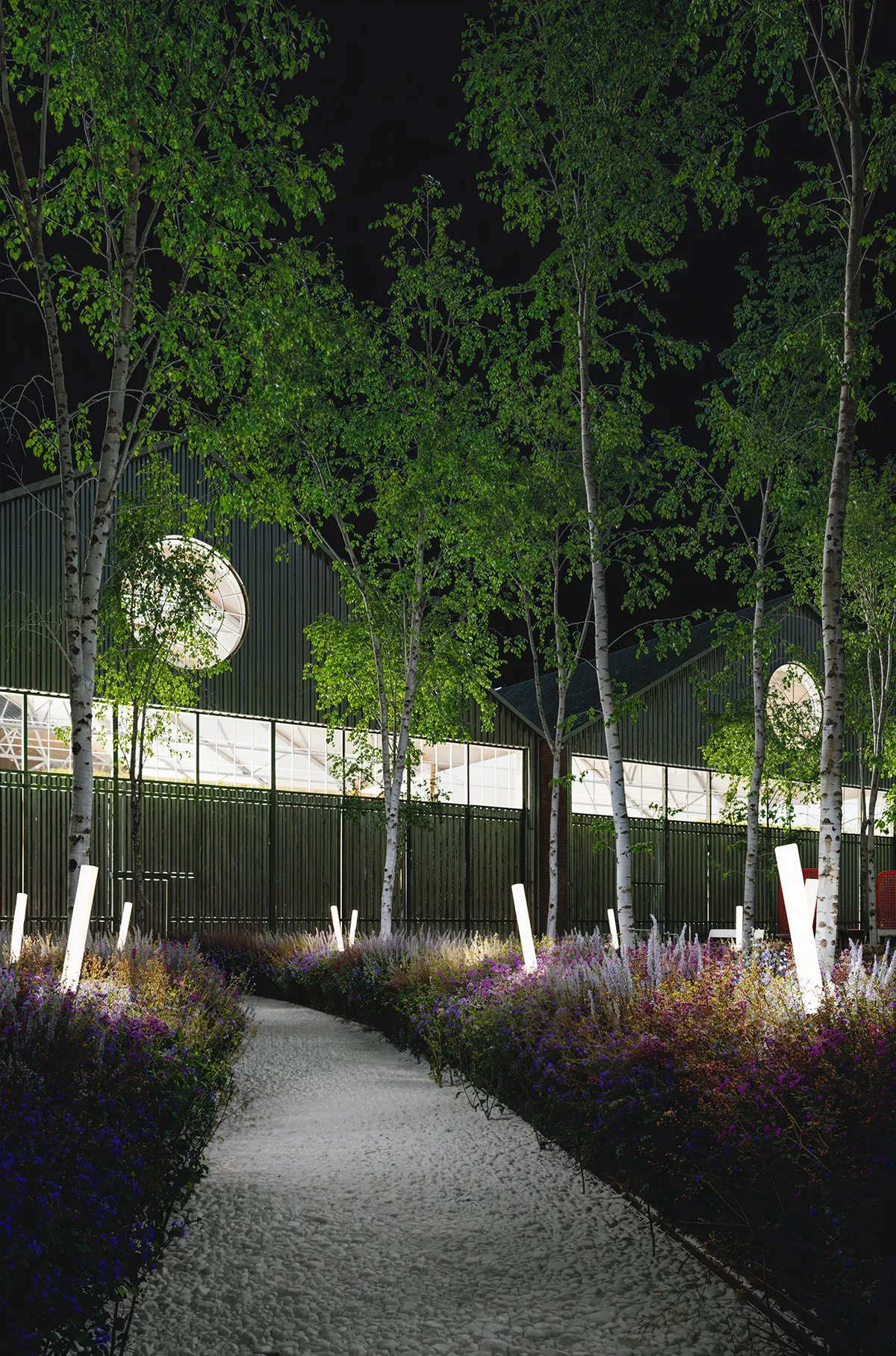
The contemporary arts programme reinforces this condition. Exhibitions, installations, performances and public spaces occupy the former industrial halls without erasing their productive memory, replacing industrial flows with cultural ones. Heritage consequently shifts from being an object of preservation to becoming the infrastructure of a new urban condition.
SCENE+ therefore proposes more than the adaptive reuse of an industrial complex. It investigates architecture's capacity to operate simultaneously on time, memory and the city, transforming the friction between historical layers into a new principle of spatial organization.