In the Text category, we aim to celebrate and promote architectural texts and their authors.
This year, entries may include texts that question, provide a critical analysis, documentation, or investigation, and present a theoretical and critical discourse around the theme of the current edition In Practice – as opposed to 'in theory'.
This category emphasizes the power of the written world to explore and debate architectural concepts, historical perspectives, and ideas for the future. Architectural writing plays a crucial role in articulating and disseminating professional thought and practice, serving as a bridge between the abstract and the tangible.
Text helps contextualize and critique the built environment, influencing the way we understand architectural practice; it encourages a deeper engagement with architectural values and the social roles that the built environment plays, offering a reflective perspective on the impact of architecture, both as a form of art and as a social science.
This category is an opportunity for architects, theorists, students, and enthusiasts from other professions to contribute to a broader conversation about the role of architecture in society and its potential to drive cultural and environmental change.
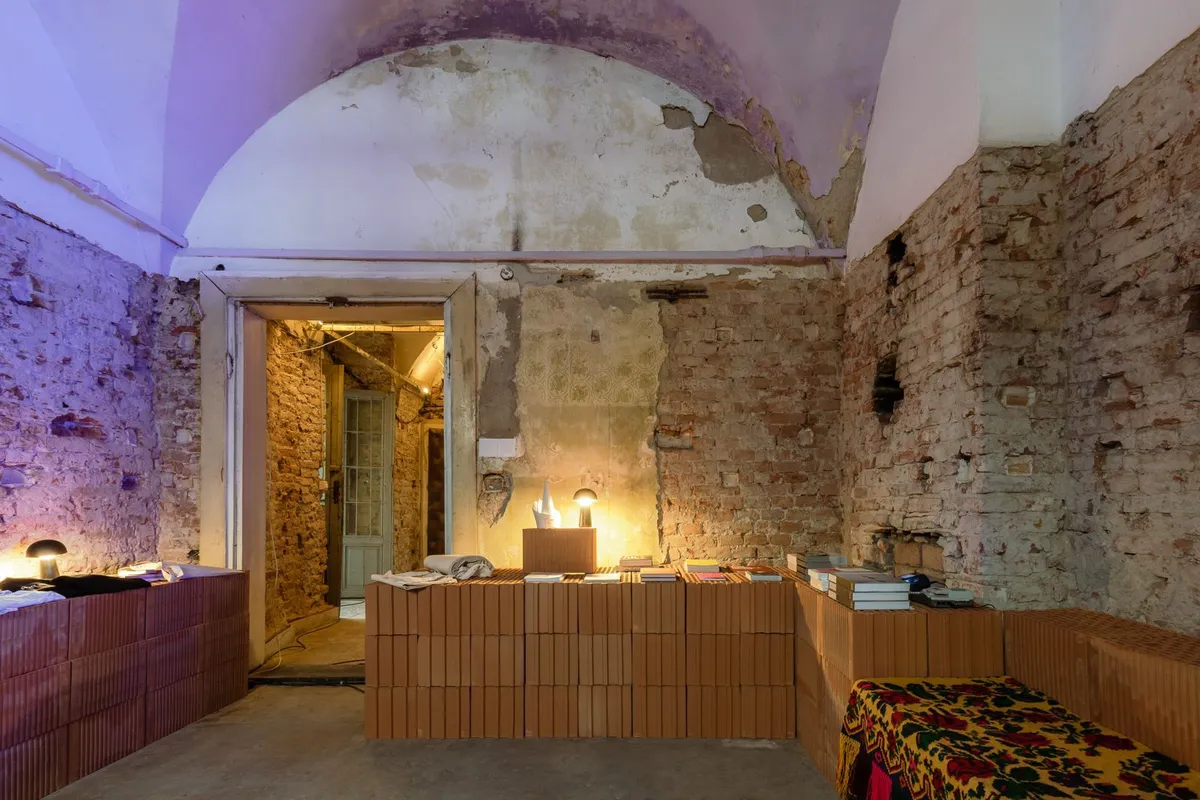
Imagine categorie: Librăria Beta 2024, credite foto: David Dumitrescu.
Jury

Useful materials for registration
What is the timeline for the Text category?
This category will take place in two stages.
Stage I – abstract based pre-selection
Developing a research idea in the form of an abstract and submitting it through the registration form on the website, according to the awards calendar.
Stage II – abstract based selection
The jury will select a series of abstracts that will develop their ideas into a text in English by 8th October 2026. The authors of the selected abstracts will be notified by email by the organizing team.
Who can participate in this category?
Anyone interested in theoretical and critical discourse may participate in this category, regardless of their field of activity, provided that they reside in or have completed their studies at a specialized university within the DKMT Euroregion.
Only individual works are accepted in this category.
The submission of written works generated with the help of artificial intelligence tools such as ChatGPT is not permitted.
Before starting the registration process for the Beta Awards, we recommend that you carefully read the rules and the application guide.
To register for the Beta Awards, you will need to fill in the registration form for the Text category. Please prepare all the necessary information and materials for upload in advance.
For the Text category, please download the following layout: Layout_03_TEXT.
When writing the abstract and, subsequently, the final text, please take into consideration the following:
- to stay within a maximum of 2,500 characters including spaces for the abstract / 20,000 characters including spaces for the final text;
- to keep the font sizes and styling exactly as in the layout;
- the text will contain a representative image of the work, which you will also need to upload in the registration form. Image dimensions: 1400 × 960 px.
- add the author’s name and the title of the work;
- in the document, the text must be written in English;
- please use the “Oxford” citation system — source referencing with the footnote option (you can consult the rules of this system here).
After filling in the layout, please export it in .pdf format and upload it to the registration form.
DKMT
The DKMT Euroregion is a European cross-border cooperation region (DKMT referring to the territory between the Danube–Criș–Mureș–Tisa rivers) which currently includes the counties of Timiș, Caraș-Severin, Arad, and Hunedoara in Romania, the counties of Csongrád and Bács-Kiskun in Hungary, and the province of Vojvodina in Serbia.